


Sick of booking “economy” and ending up with your knees pressed against the seat in front?
This post ranks airlines with the largest economy legroom using seat-pitch averages from the ten busiest routes of 2024.
You’ll see which carriers and specific aircraft give the most space, the real difference between pitch and usable legroom, and quick rules for when to pay for extra-legroom seats or premium economy.
Read on to pick flights that actually feel roomy, not just look roomy on paper.
Ranked Comparison of Airlines Offering the Most Economy Legroom
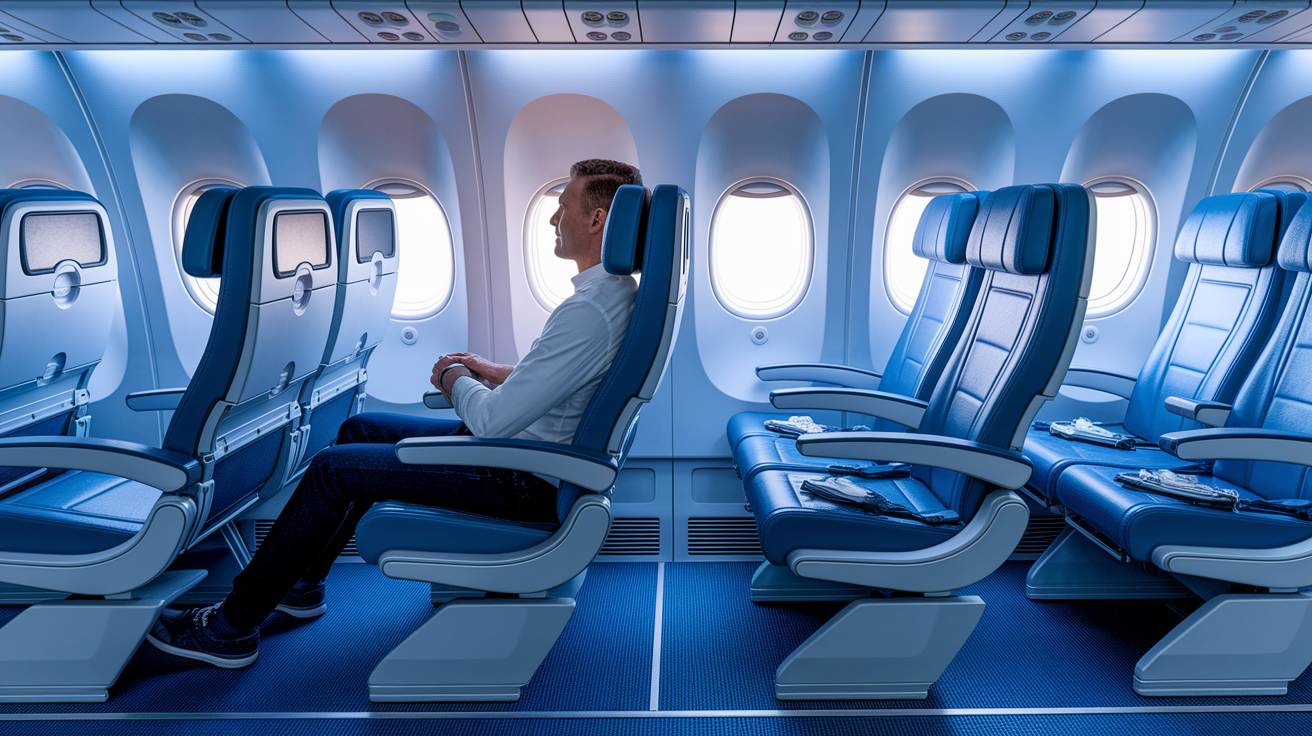
Seat pitch measures the distance from one point on a seat to the same point on the seat ahead. It’s the best way to compare legroom between airlines, though actual comfort also depends on seat recline, under-seat storage, and how thick the seatback is. Rankings in 2025 come from analyzing the ten busiest flight routes of 2024, showing a pretty clear spread between the most generous and the most cramped standard economy setups.
The tightest seats have shrunk by about four inches over the past few decades. Among major U.S. carriers, the difference between the top and bottom exceeds four inches. That’s the difference between sitting comfortably and your knees pressing into the seatback for the entire flight.
| Airline | Seat Pitch (in / cm) | Notes |
|---|---|---|
| JetBlue | 32.7 in / 83.1 cm | Highest among U.S. carriers |
| Southwest | 31.7 in / 80.5 cm | Consistent across 737 fleet |
| Delta Air Lines | 31.0 in / 78.7 cm | Matches Alaska; varies by aircraft |
| Alaska Airlines | 31.0 in / 78.7 cm | Matches Delta; fleet average |
| American Airlines | 30.3 in / 77.0 cm | Mid-range among legacy carriers |
| United Airlines | 30.0 in / 76.2 cm | Standard 737 configuration |
| Hawaiian Airlines | 29.0 in / 73.7 cm | Below legacy-carrier average |
| Frontier Airlines | 28.0 in / 71.1 cm | Tied for tightest among ranked carriers |
| Spirit Airlines | 28.0 in / 71.1 cm | Tied for tightest among ranked carriers |
These numbers represent averages across each carrier’s mainline domestic fleet. Actual pitch varies by aircraft model, route, and even individual airplane. A carrier’s average doesn’t tell you what you’ll get on the specific flight you’re booking. You need to check the seat map for your exact aircraft and route to confirm.
Global Airlines With Spacious Economy Cabins (International Leaders)
Asian carriers dominate the global legroom rankings. Japan Airlines configures its Boeing 787 fleet in an eight-abreast layout instead of the nine-abreast standard, resulting in the world’s widest standard 787 economy seats at 18.9 inches (48 cm). JAL’s long-haul 777s and 787s offer 33–34 inches (83.8–86.4 cm) of seat pitch, earning recognition from Skytrax in 2025 for the world’s best economy class seat. All Nippon Airways provides 34 inches (86.4 cm) of seat pitch as standard across its long-haul 787 and 777 fleets, though the width measures 17.2 inches (43.7 cm) in the nine-abreast 787 configuration. Korean Air reversed plans to reconfigure its 777-300ER from nine-abreast to ten-abreast following public backlash, keeping its refreshed 777s at 33–34 inches (83.8–86.4 cm) pitch with nine-abreast layouts.
Middle Eastern carriers offer decent pitch but sometimes squeeze width. Emirates provides 32–33 inches (81.3–83.8 cm) of seat pitch on its 777-300ER, but the ten-abreast 3-4-3 configuration reduces seat width to just 17 inches (43.2 cm). The Emirates A380 improves to 17.5–18 inches (44.5–45.7 cm) width at similar pitch, with Premium Economy now available across 68 destinations as of March 2026. Etihad and Qatar Airways typically offer 31–33 inches (79–84 cm) in long-haul economy, with seat width varying by aircraft type.
European legacy carriers usually land in the middle of the pack. Singapore Airlines maintains 32 inches (81.3 cm) pitch fleet-wide, with width ranging from 18–18.5 inches (45.7–47 cm) on A350 and 777 aircraft, expanding to 19 inches (48.3 cm) on the A380. Cathay Pacific won Skytrax World’s Best Economy Class awards in both 2024 and 2025, maintaining nine-abreast layouts on its 777, A350, and 787 fleets with 32 inches (81.3 cm) pitch and 18.5 inches (47 cm) width. British Airways, Lufthansa, Air France, and KLM typically provide 30–32 inches (76–81 cm) on long-haul and short-haul jets.
- Japan Airlines: 33–34 in (83.8–86.4 cm) pitch, 18.9 in (48 cm) width on 787s
- All Nippon Airways: 34 in (86.4 cm) pitch on long-haul 787 and 777
- Korean Air: 33–34 in (83.8–86.4 cm) pitch after reversing densification plans
- Singapore Airlines: 32 in (81.3 cm) pitch, 18–19 in (45.7–48.3 cm) width depending on aircraft
- Cathay Pacific: 32 in (81.3 cm) pitch, 18.5 in (47 cm) width, nine-abreast on widebodies
- Emirates: 32–33 in (81.3–83.8 cm) pitch, but width drops to 17 in (43.2 cm) on ten-abreast 777s
Understanding Seat Pitch, Seat Width, and How They Affect Comfort
Seat pitch isn’t the same as legroom, but it’s the closest proxy you’ll find when comparing flights. It measures the distance between one point on your seat and the same point on the seat in front of you, usually from the back of one seat to the back of the next. A seat with 32 inches of pitch doesn’t mean you get 32 inches of knee space. The thickness of the seatback and the recline of the seat in front eat into that number. Still, higher pitch almost always translates to more room for your legs.
Width matters as much as pitch on long flights. A seat can have 34 inches of pitch and still feel cramped if it’s only 17 inches wide and your shoulders are jammed against the armrests for eight hours. The difference between a nine-abreast and ten-abreast configuration on a Boeing 777 is roughly one to two inches per seat. You’ll feel every bit of that missing width on a red-eye to Tokyo.
Seat pitch affects how far your knees are from the seatback ahead. Seat width determines shoulder and hip comfort, especially on widebodies. Recline angle changes how much your own seatback intrudes on the person behind you. Seatback thickness and under-seat storage boxes can reduce usable legroom even when pitch numbers look good.
Comparing Standard Economy vs Premium Economy Legroom
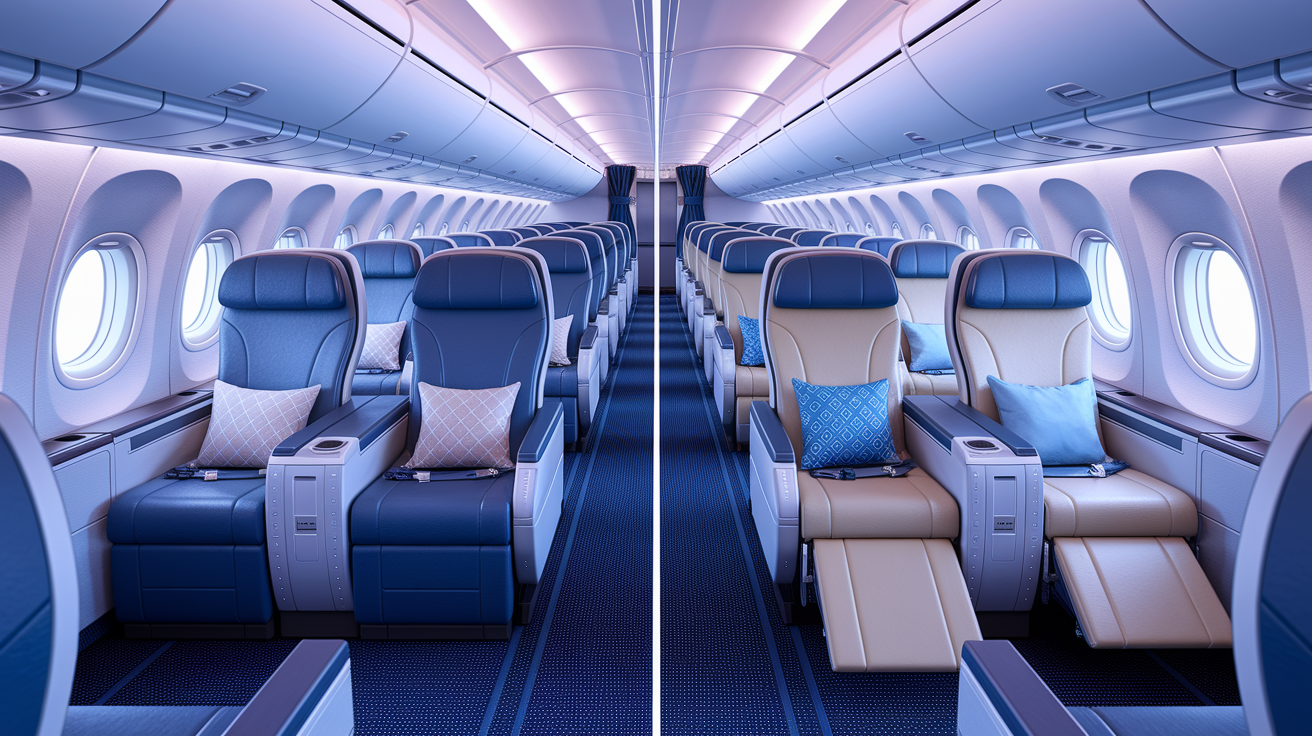
Premium Economy typically delivers 38–40 inches (96–102 cm) of seat pitch, compared with 28–34 inches (71–86 cm) in standard economy. That’s six to twelve inches of extra space, plus wider seats, deeper recline, and often a footrest. The difference is most noticeable on long-haul flights where you’ll spend eight or more hours in the seat.
The fare uplift for Premium Economy usually runs 50 to 200 percent more than the cheapest economy ticket. On a transatlantic roundtrip, expect to pay an extra $400 to $1,800 depending on the route, dates, and how far in advance you book. For some travelers, paying for Premium Economy makes more sense than buying a standard economy ticket and then adding paid extra-legroom seats. Premium Economy also includes priority boarding, better meal service, and more generous baggage allowances.
| Airline | Standard Economy Pitch | Premium Economy Pitch | Typical Upgrade Cost Range |
|---|---|---|---|
| British Airways | 30–31 in (76–79 cm) | 38 in (96 cm) | +$400–$1,200 roundtrip |
| Virgin Atlantic | 31 in (79 cm) | 38 in (96 cm) | +$500–$1,500 roundtrip |
| Delta Air Lines | 31 in (79 cm) | 38 in (96 cm) | +$300–$1,000 roundtrip |
| Singapore Airlines | 32 in (81 cm) | 38 in (96 cm) | +$600–$1,800 roundtrip |
| Lufthansa | 31 in (79 cm) | 38 in (96 cm) | +$400–$1,300 roundtrip |
Aircraft Types That Offer the Best Economy Legroom
The aircraft you fly on matters more than the airline’s average seat pitch. JetBlue’s Airbus A220-300 offers 32 inches (81.3 cm) of pitch and 18.6 inches (47.2 cm) of seat width in a five-abreast 2-3 layout, making it one of the most comfortable narrowbody configurations in North America. Many carriers configure their Airbus A321neo, A321LR, and A321XLR variants with 32–34 inches (81–86 cm) of pitch on premium transcontinental services, a noticeable step up from the 30–31 inches (76–79 cm) you’ll find on standard domestic 737s and A320s.
Widebody aircraft can be spacious or cramped depending on how many seats the airline squeezes in. Japan Airlines’ eight-abreast Boeing 787 in a 2-4-2 layout delivers 18.9 inches (48 cm) of width, versus the 17–17.5 inches (43.2–44.5 cm) you get on most nine-abreast 787s. Emirates fits ten seats across on its 777-300ER in a 3-4-3 configuration, shrinking width to 17 inches (43.2 cm), while carriers like Cathay Pacific and Korean Air keep the nine-abreast 3-3-3 layout at 18 inches (45.7 cm). The Airbus A350 typically offers 32 inches (81.3 cm) of pitch and 18–18.5 inches (45.7–47 cm) of width on carriers like Singapore and Cathay.
Regional jets and older narrowbodies often drop to 29–31 inches (74–79 cm) of pitch. If your connection involves a 50-seat regional jet, check the seat map. Pitch can be tight even on short flights.
Airbus A220-300 (five-abreast): 32 in pitch, 18.6 in width, comfortable for most passengers
Boeing 787 eight-abreast (JAL): 33–34 in pitch, 18.9 in width, widest 787 seats globally
Airbus A350 (Singapore, Cathay): 32 in pitch, 18–18.5 in width, nine-abreast standard
Airbus A321neo/LR (premium transcon configs): 32–34 in pitch on select routes
Boeing 777 nine-abreast (Korean Air, Cathay): 33–34 in pitch, 18 in width, avoids ten-abreast squeeze
Extra-Legroom Seat Options: Exit Row, Bulkhead, and Paid Programs
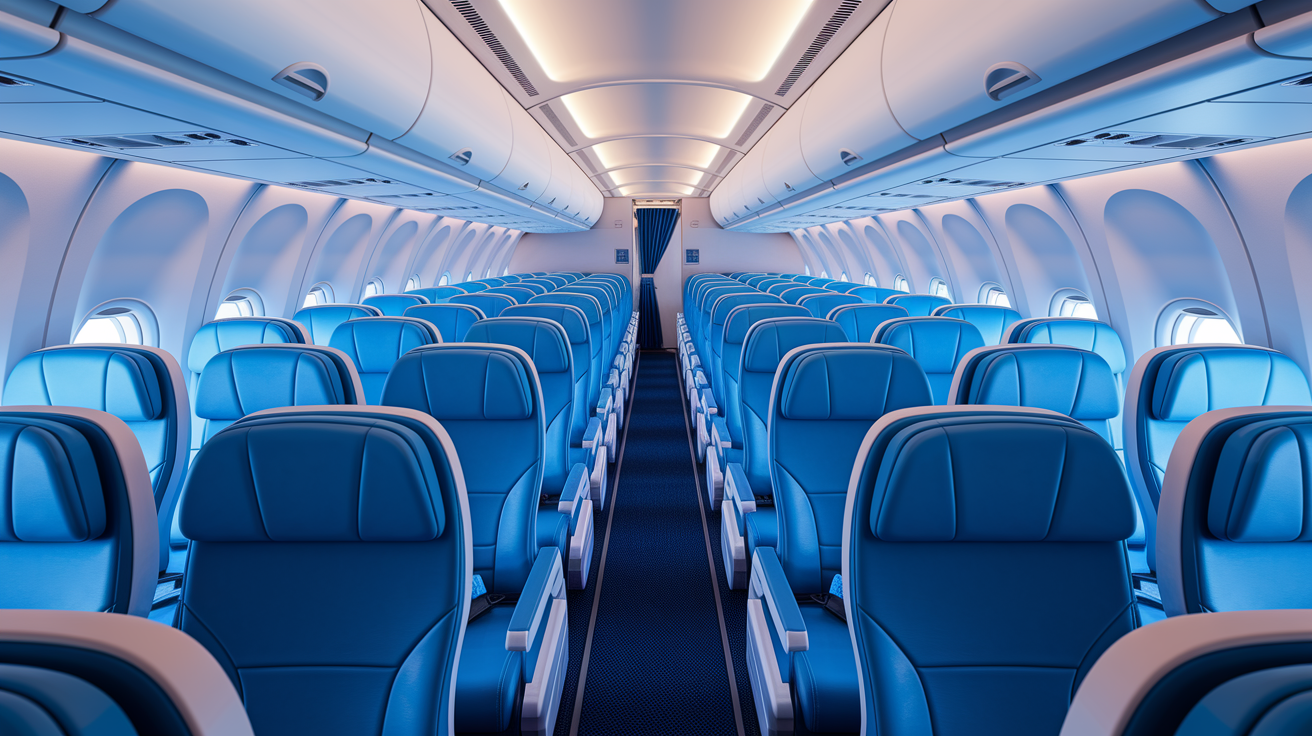
Exit rows can offer up to five inches more legroom than standard economy seats. You’ll find them over the wing or near the rear doors, and they’re worth the fee if you’re tall or flying long-haul. The tradeoffs: you can’t store anything under the seat in front during takeoff and landing, recline is often limited, and you’re legally required to assist with an emergency exit if needed. Most airlines restrict exit-row seats to passengers who are at least 15–18 years old, physically able, willing to help, and proficient in the aircraft’s operating language.
Bulkhead seats eliminate the row in front, giving you unobstructed legroom and no one reclining into your space. You lose the under-seat storage entirely and sometimes the seatback pocket, and you’ll need to stow your phone and tablet during taxi, takeoff, and landing. Bulkheads are often located near lavatories, which means more foot traffic and noise. Families with infants sometimes get assigned bulkheads because that’s where bassinet attachments are installed.
Paid extra-legroom programs vary by carrier. Domestic short-haul fees typically run $10–$80 one way for an exit row or preferred seat near the front. Long-haul extra-legroom seats cost $25–$300 per sector depending on the route and airline. Elite status members often get complimentary access to these seats, and some fare classes include free seat selection in extra-legroom sections.
| Seat Type | Typical Pitch Gain | Pros | Cons | Price Range |
|---|---|---|---|---|
| Exit Row | +3 to +5 in (8–13 cm) | Significant legroom, usually same seat width | No under-seat storage, limited recline, safety responsibilities, age/ability restrictions | $10–$80 short-haul, $25–$300 long-haul |
| Bulkhead | +2 to +4 in (5–10 cm) | No seat ahead, no recline intrusion, more foot space | No under-seat storage, fixed armrests, often near lavatories, devices must be stowed | $10–$60 short-haul, $25–$200 long-haul |
| Paid Extra-Legroom (Economy Plus, Preferred, etc.) | +2 to +4 in (5–10 cm) | More space than standard, priority boarding on some carriers, early seat selection | Not as spacious as Premium Economy, variable pricing, can be sold out | $10–$80 short-haul, $25–$300 long-haul |
Booking Strategies to Secure the Most Legroom in Economy
Check the aircraft type and seat map as soon as you book. Airlines list the specific aircraft on the booking confirmation and in your account, and most carriers publish detailed seat maps showing pitch and seat features. Don’t rely on the carrier’s average pitch. Verify your exact flight’s configuration. Aircraft substitutions happen, especially on routes with multiple daily frequencies, so check again 24 hours before departure when seat assignments open up.
Use your loyalty status if you have it. Elite members on most programs get complimentary access to extra-legroom seats that other passengers pay for, and some carriers automatically assign better seats to elites at booking or check-in. If you’re close to status, it might be worth crediting a few more flights to unlock free upgrades and seat selection before your next long-haul trip.
Confirm the exact aircraft type in your booking and cross-check it on the airline’s fleet page or a seat-map database to see the listed pitch. Compare exit-row and bulkhead seats on the seat map, noting any storage or recline restrictions in the seat details. Pay for extra-legroom seats at booking rather than waiting for check-in, because prices often rise closer to departure and popular seats sell out.
Ask at the gate if extra-legroom or premium-economy seats are still available. Last-minute availability sometimes opens up, especially on lightly booked flights. Store non-essential carry-on items in the overhead bin after boarding to keep the space under the seat in front clear for your feet and laptop bag.
Final Words
In the action: we gave a data-backed ranking of U.S. carriers, listed international leaders, and explained seat pitch, width, and why it matters for comfort.
We compared standard vs premium economy, showed which aircraft usually give more space, and broke down exit-row, bulkhead, and paid extra-legroom options.
Follow the booking steps to verify aircraft and seat maps before you buy.
Use this quick system to pick the right flight — and choose among airlines with largest economy legroom when space really matters.
FAQ
Q: Which airline has the most leg room in the economy?
A: The airline with the most legroom in economy is JetBlue, averaging 32.7 in (83.1 cm) seat pitch on major U.S. routes; Southwest (31.7 in) and Delta/Alaska (31.0 in) follow.
Q: Which airline has the worst leg room?
A: The airline with the worst standard economy legroom among major U.S. carriers is Frontier and Spirit, both averaging about 28.0 in (71.1 cm) seat pitch; Hawaiian is lower than most at 29.0 in.