
Think Air Canada’s carry-on rules are simple? Think again.
Lots of travelers reach the gate and learn their bag won’t fit or a battery can’t go in checked luggage.
This quick guide gives the straight facts: the exact size limits (55 × 40 × 23 cm for a standard cabin bag; 33 × 43 × 16 cm for a personal item), what you can and can’t bring, how fare class affects your allowance, and easy home checks to avoid a surprise gate fee.
Read on to pack smart and skip the hassle.
Complete Overview of Air Canada Carry-On Allowances (Dimensions, Weight, What You Can Bring)
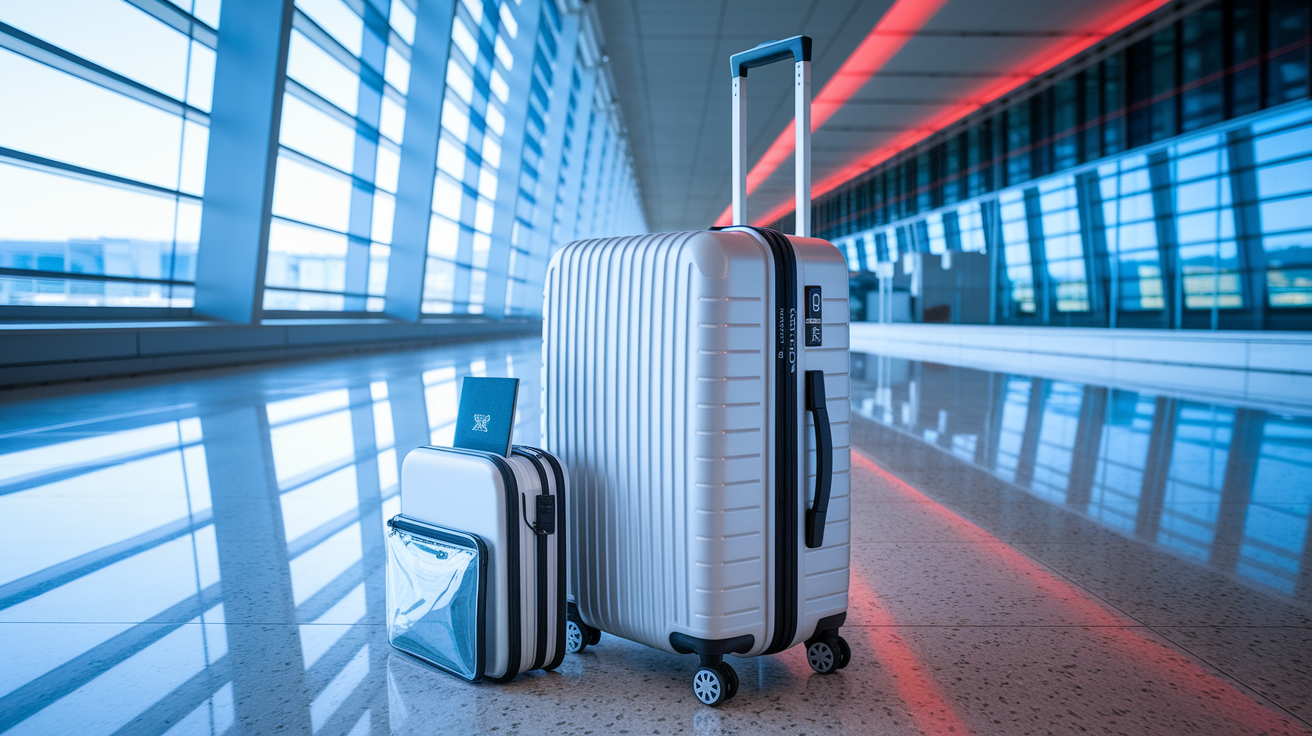
Air Canada gives you one standard carry-on bag plus one personal item at no charge, unless you’re on a restricted fare. Your carry-on can’t be bigger than 55 × 40 × 23 cm (21.5 × 15.5 × 9 in), and that includes wheels and handles. The personal item needs to fit under the seat in front of you and can’t exceed 33 × 43 × 16 cm (13 × 17 × 6 in).
There’s no published weight limit for carry-ons. But you have to be able to lift your bag into the overhead bin yourself. If you can’t do it without help from crew or other passengers, gate agents will check it at the gate. And you’ll probably pay a checked-bag fee.
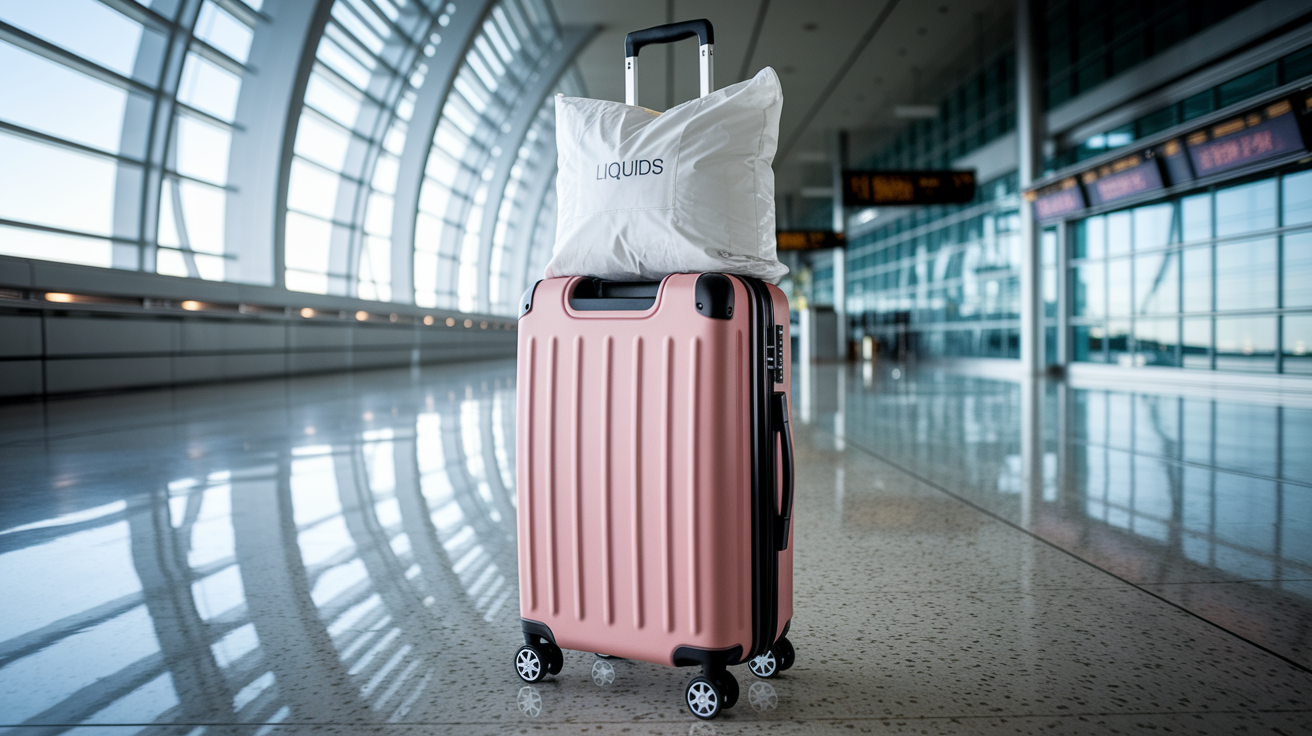
Liquids, gels, and aerosols are capped at 100 ml (3.4 fl oz) per container. Everything has to fit in one clear, resealable bag that holds a maximum of 1 liter. Think a quart-sized bag, around 6 × 9 inches or 8 × 7 inches. One bag per passenger.
What you can bring and what you can’t:
- Permitted: laptop, tablet, phone, charging cables, toiletries under 100 ml in a clear bag, medications, CPAP machines, e-cigarettes (you can’t use them on board), portable chargers, small purse, camera
- Prohibited: sharp objects (knives, scissors with blades over 6 cm, razors with exposed blades), tools, sporting equipment, liquids over 100 ml, lighters (except one standard lighter), pepper spray, firearms
- Carry-on only (can’t be checked): lithium batteries, power banks, e-cigarettes, spare laptop batteries
- Must be checked: hockey sticks, golf clubs, ski poles, large tools, liquids over 100 ml
- Special cases: duty-free liquids in sealed tamper-evident bags are okay if you bought them within 48 hours of travel and have the receipt
- Infant items: parents with an infant on lap can bring one extra infant essentials bag
- Pet carriers: these count as your personal item and have to fit under the seat
- Medical devices: CPAP machines, insulin pumps, and assistive devices don’t count toward your allowance
Gate agents enforce size limits strictly. They use metal sizers at the gate and during boarding. If your bag doesn’t fit the sizer or you can’t stow it yourself, you’ll check it at the gate and pay the checked-baggage fee right there.
Air Canada Bag Measurement Techniques and Fit Testing at Home
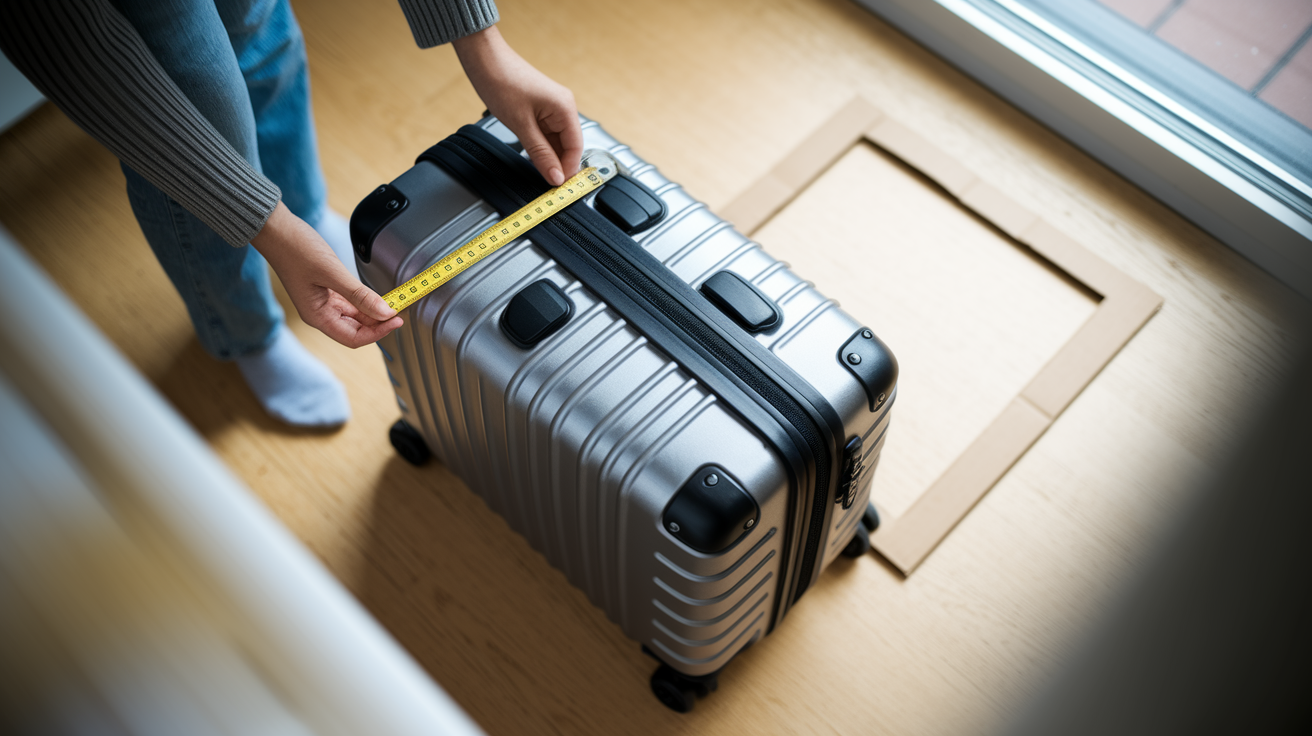
When you measure your bag at home, use a tape measure to capture total length, width, and height. Include every protruding part: wheels, handles, external pockets, compression straps, hardware. Set the bag upright the way it’ll sit in the overhead bin. Make sure any telescoping handle is fully collapsed. Measure from the outermost edges.
Soft-shell bags can compress a little. But Air Canada’s gate sizers are rigid frames, so don’t count on squeezing an oversized bag through the test. Hard-shell suitcases have fixed dimensions and zero give. If a rigid bag measures 56 cm in any direction at home, it’ll fail the 55 cm limit at the gate.
To test fit at home, slide your bag into a cardboard box or frame that matches Air Canada’s carry-on limit: 55 × 40 × 23 cm. If the bag wedges or forces its way in, it’s too large. Flexible cabin backpacks around 28 liters usually stay within limits because they don’t have rigid frames and can compress when packed lightly. Spinner suitcases often push the width limit because four-wheel assemblies add bulk to the bag’s footprint.
Always measure all protruding parts. Forgetting to include wheel height or a side handle can mean a bag that passes your home test but fails the metal sizer at the gate.
Air Canada Personal Item Rules and Underseat Space Requirements
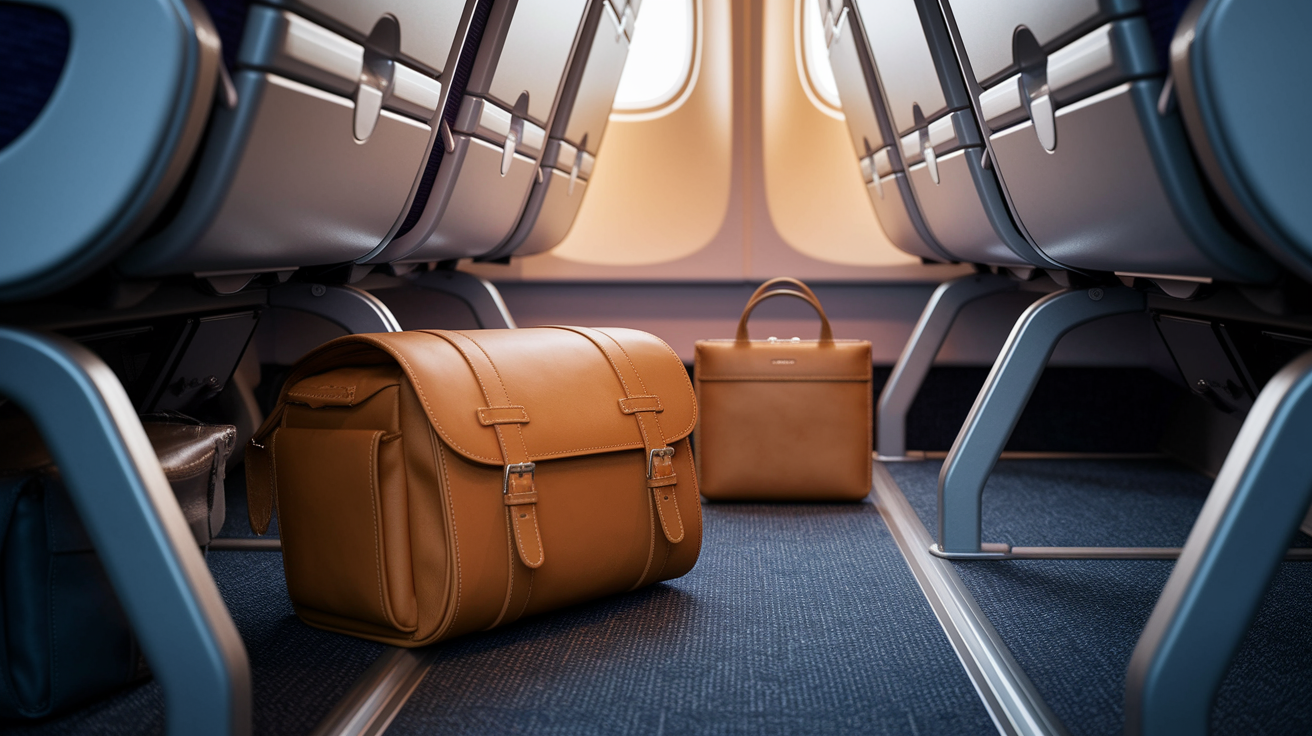
Your personal item has to fit completely under the seat in front of you. Can’t exceed 33 × 43 × 16 cm (13 × 17 × 6 in). Underseat space is smaller and more irregular than overhead bins, especially on narrow-body aircraft and regional jets. If your personal item is too tall, thick, or wide, it’ll block your legroom or intrude into the seat next to you. Flight attendants will ask you to move it to the overhead bin, which cuts into your carry-on capacity.
Common personal items that fit comfortably: a small backpack (under 20 liters), a laptop sleeve or slim briefcase, a crossbody purse, a camera bag, or a tote bag that can flatten when placed under the seat. Very small purses (up to about 10 × 12 × 5.5 inches or 25 × 30 × 14 cm) might be carried in addition to a personal item on some flights. But larger handbags count as your personal item.
Typical personal items that meet the size limit:
- Laptop backpack (16 to 20 liter capacity)
- Slim briefcase or messenger bag
- Standard-size purse or crossbody bag
- Camera bag or small duffel
- Tote bag that can compress flat
Air Canada Carry-On Rules by Fare Class and Route

Air Canada’s carry-on allowance depends on which fare you buy and where you’re flying. Most passengers on Standard, Flex, Comfort, and Latitude economy fares get one standard carry-on bag plus one personal item at no charge. Premium Economy and Business Class passengers also get the same cabin allowance, though they usually receive extra checked-baggage allowances.
Route geography matters. Flights within Canada, to or from the United States (including Hawaii and Puerto Rico), Mexico, Central America, and the Caribbean follow one set of rules. International routes outside those regions (flights to Europe, Asia, South America, the Middle East, or Africa) follow different policies. When you book connecting itineraries, baggage rules are determined by the final international destination, not by individual flight segments.
Aeroplan Elite Status holders, Star Alliance Gold members, and certain Aeroplan co-branded credit cardholders might get exemptions from Basic fare restrictions or additional checked-baggage allowances. But those benefits don’t change the baseline carry-on dimensions or personal-item size limits.
Basic Fare Restrictions (Jan 2025 Update)
Tickets purchased on or after January 3, 2025 for travel on Air Canada’s Basic economy fare include only one personal item when flying within Canada, to or from the U.S., Mexico, Central America, or the Caribbean. Passengers on these routes don’t get a complimentary standard carry-on bag. If you show up at the gate with a standard carry-on, Air Canada will pre-authorize CA/US $65 to $78 on your credit card at check-in and charge that amount if you board with the bag. International Basic fare itineraries (routes to Europe, Asia, South America, or other regions outside North America and the Caribbean) still include one carry-on bag plus one personal item, even if the itinerary includes a connection through Canada or the U.S.
Liquids, Batteries, and Security Restrictions for Air Canada Carry-On Bags
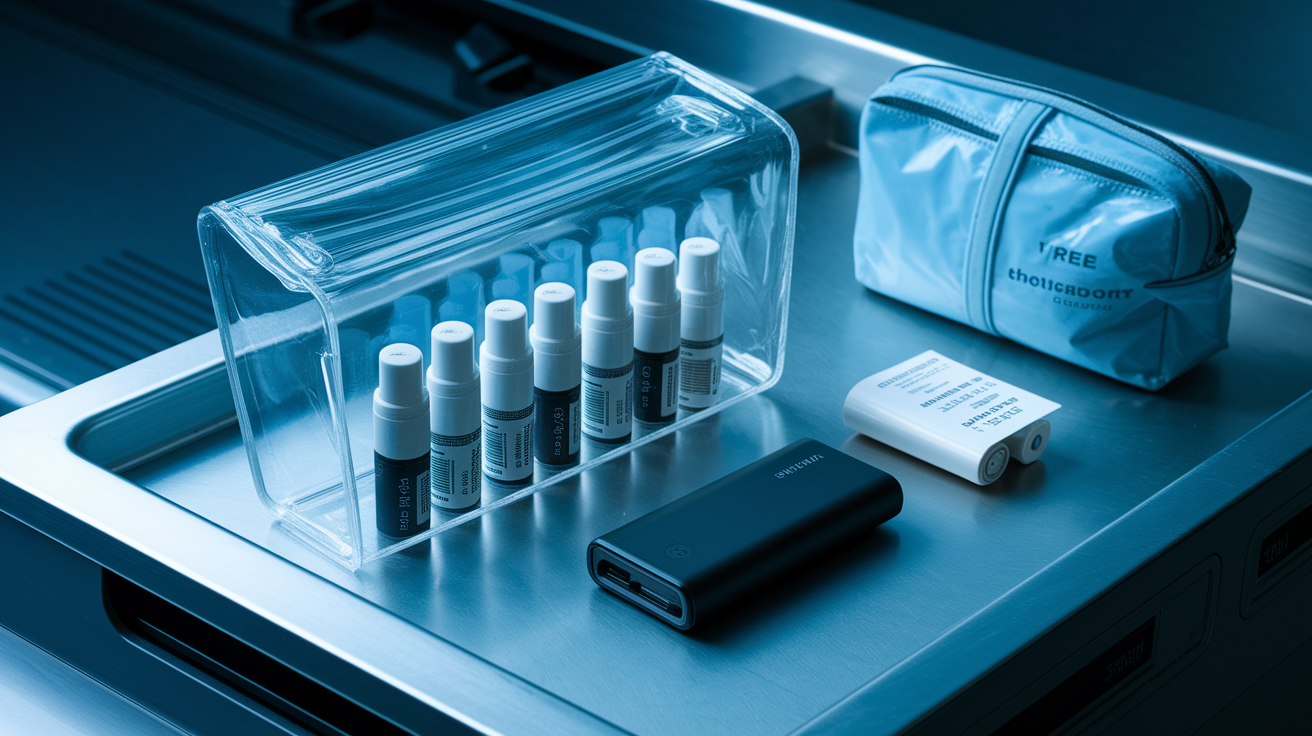
Canadian airport security follows a 100 ml rule similar to the TSA’s 3-1-1 policy. Each liquid, gel, or aerosol container in your carry-on has to be 100 ml (3.4 fl oz) or smaller. All containers must fit into a single clear, resealable plastic bag with a maximum capacity of 1 liter. Security bins at Canadian airports typically accommodate bags around 6 × 9 inches (15.24 × 22.86 cm) or 8 × 7 inches (20 × 17.5 cm). Only one liquids bag per passenger.
Duty-free liquids purchased at the airport can create problems on connecting flights. If you buy duty-free alcohol or perfume and then pass through another security checkpoint during a connection, those liquids might be confiscated unless they’re in a sealed tamper-evident bag with the receipt showing purchase within 48 hours. Air Canada recommends placing duty-free liquids in your checked baggage if your itinerary includes transfers through additional security-controlled terminals.
| Item Type | Carry-On Rule |
|---|---|
| Liquids, gels, aerosols (toiletries) | ≤100 ml per container; all in 1 L clear bag |
| Lithium batteries, power banks | Must be in carry-on; not allowed in checked baggage |
| E-cigarettes, vapes | Must be in carry-on; cannot be used on board |
| Duty-free liquids (sealed bag) | Allowed if purchased <48 hrs; receipt required |
| Medications (liquid or gel) | Exempt from 100 ml limit; declare at screening |
| Standard lighter (one per passenger) | Allowed in carry-on; torch lighters prohibited |
Pack your liquids bag on top of your carry-on or in an exterior pocket so you can remove it quickly at the security checkpoint. Forgetting to separate your liquids bag or showing up with containers over 100 ml will slow down the line and might result in items being discarded.
Air Canada Carry-On Exceptions for Infants, Medical Items, Pets, and Assistive Devices
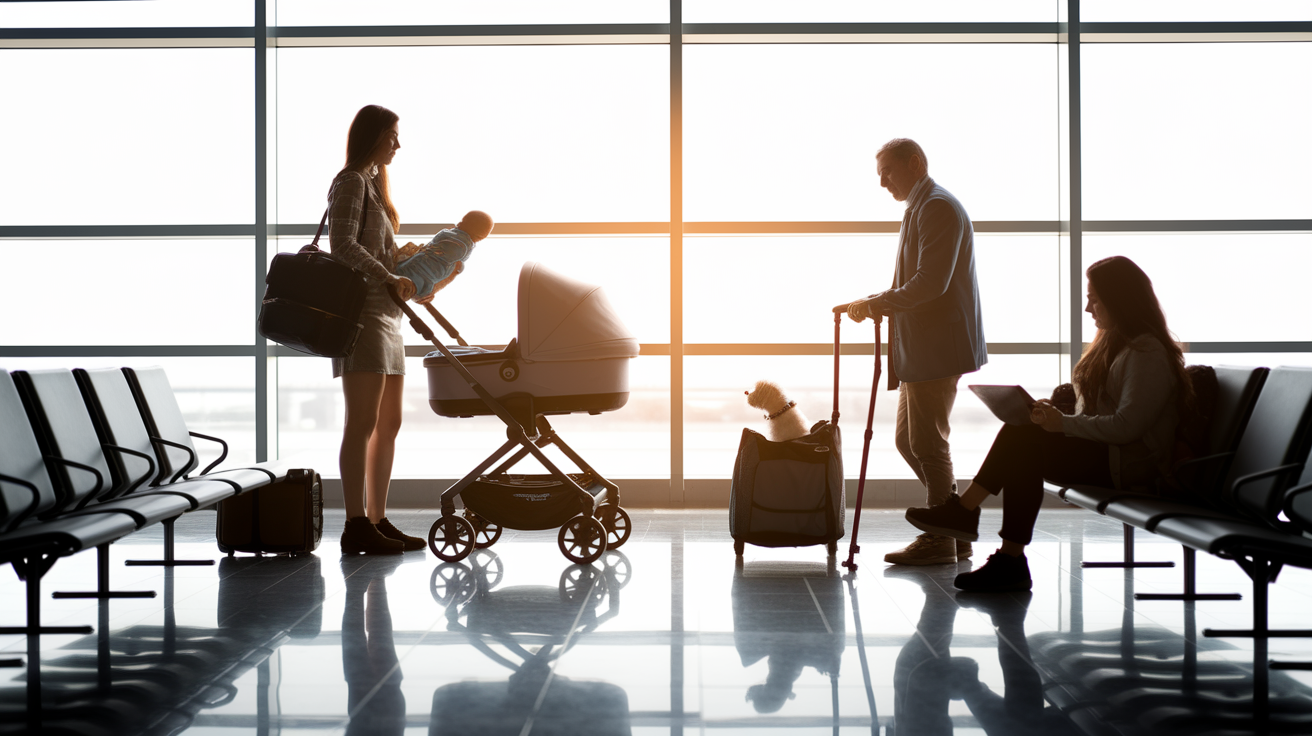
Parents traveling with an infant on their lap can bring one additional infant essentials bag (like a diaper bag or small backpack) beyond the standard carry-on and personal item allowance. This infant bag is for diapers, wipes, formula, bottles, and extra clothing. Up to two essential infant items (stroller, car seat, or playpen) can be checked free of charge regardless of fare type. Collapsible strollers measuring under 92 cm (36 in) can often be gate-checked just before boarding.
Medical equipment and assistive devices don’t count toward your carry-on allowance. CPAP machines, portable oxygen concentrators, insulin pumps, crutches, walkers, and wheelchairs are allowed in the cabin in addition to your standard carry-on and personal item. Some battery-powered medical devices require advance notification or documentation from your doctor, so confirm requirements with Air Canada at least 48 hours before departure.
Approved categories for carry-on exceptions:
- Infant essentials bag: one extra bag for diaper supplies, formula, and baby items when traveling with an infant on lap
- Infant equipment: stroller, car seat, or portable crib checked free; strollers under 36 in can be gate-checked
- Assistive devices: wheelchairs, crutches, walkers, canes allowed in cabin or checked free
- Medical devices: CPAP, oxygen concentrator, nebulizer allowed in cabin; some need advance notice
- Pet carriers: cats and small dogs in approved soft-sided carriers count as your personal item; carrier must fit under seat
How Air Canada Enforces Carry-On Size and When Bags Get Gate-Checked
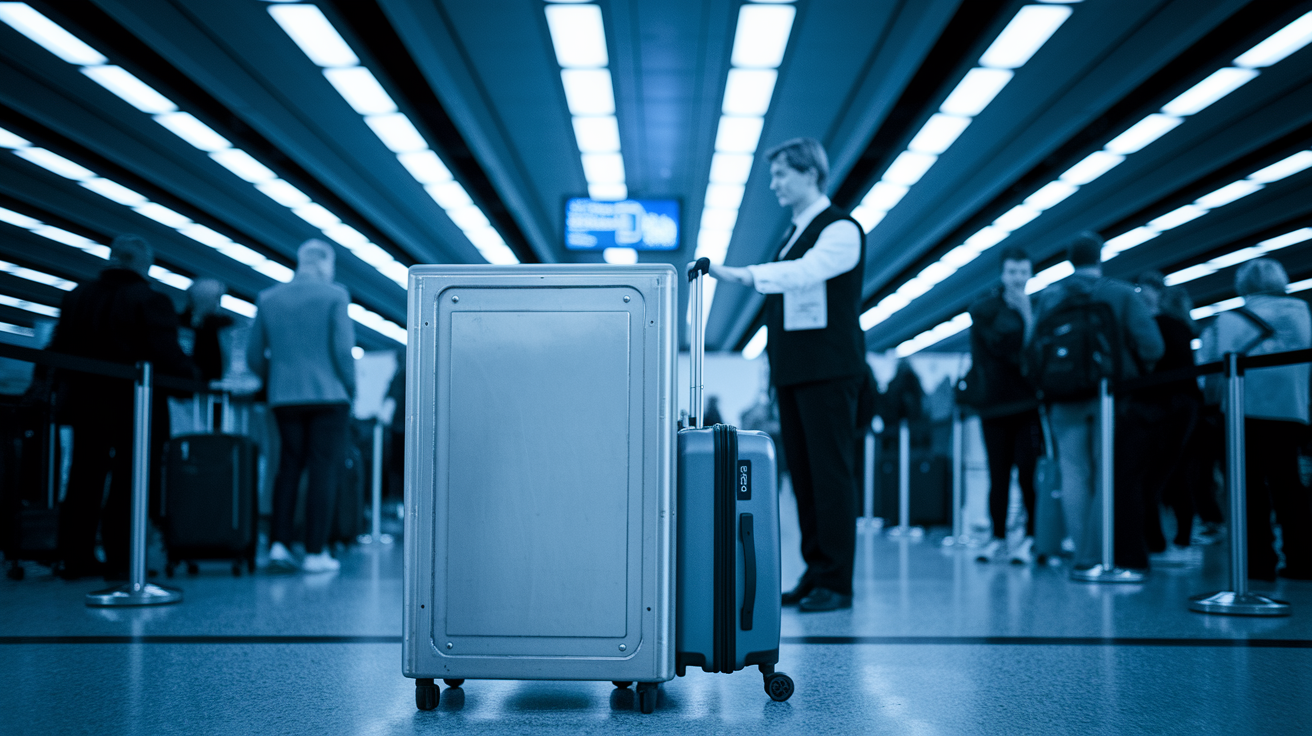
Air Canada gate agents use metal sizers at the boarding gate to verify that carry-on bags meet the 55 × 40 × 23 cm limit. The sizer is a rigid frame with fixed dimensions. If your bag doesn’t slide in easily, the agent will require you to check it. Enforcement is especially strict on regional aircraft operated by Air Canada Express, where overhead bins are smaller and fill quickly. During busy travel periods, agents prioritize compliance checks to avoid boarding delays caused by passengers struggling to stow oversized bags.
If a bag fails the sizer test or if you can’t lift your bag into the overhead bin without assistance, you’ll be required to gate-check it. Gate-checked bags due to size or weight violations are subject to the applicable checked-baggage fee, which is charged on the spot. Fees range from $45 for the first checked bag on domestic routes to $75 or more on international itineraries, depending on fare type and destination.
Common reasons your carry-on will be gate-checked:
- Bag exceeds 55 × 40 × 23 cm in any dimension (including wheels and handles)
- Bag is too heavy for you to lift into the overhead bin on your own
- Overhead bins are full due to high load factor on small aircraft
- Bag has rigid or protruding parts that prevent it from fitting flat in the bin
Air Canada Checked-Bag Limits That Affect Carry-On Decisions
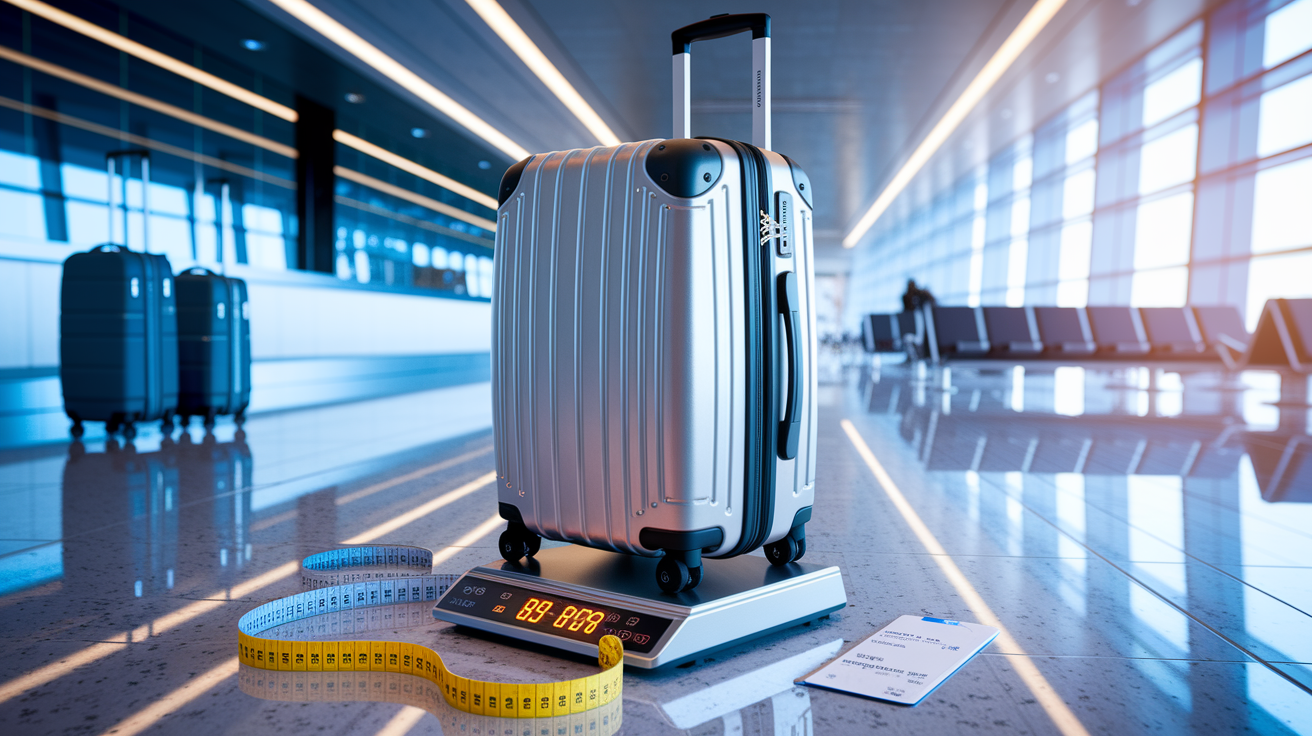
Understanding Air Canada’s checked-baggage fees and limits helps you decide whether to pack light and carry on or to check a bag from the start. Each checked bag can’t exceed 158 cm (62 in) in total linear dimensions (length plus width plus height, including wheels and handles). Standard maximum weight is 23 kg (50 lb) per bag for economy passengers. Business-class passengers can check bags up to 32 kg (70 lb) each.
If your checked bag weighs between 23 kg and 32 kg, you’ll pay an overweight surcharge of about $100. If the bag’s linear dimensions fall between 158 cm and 292 cm, you’ll pay an oversize surcharge of roughly $100. Bags that are both overweight and oversized incur only a single combined fee, not two separate charges. Bags exceeding 32 kg or 292 cm linear can’t be transported as passenger baggage and have to be shipped via Air Canada Cargo.
Typical first checked-bag fees (effective April 13, 2026) are $45 within Canada and to/from the U.S., and $75 on most international routes. Second checked-bag fees are $60 domestic/transborder and $100 international.
| Bag Type | Max Weight | Typical Fee (first bag) |
|---|---|---|
| Standard checked bag (economy) | 23 kg / 50 lb | $45 domestic; $75 international |
| Business class checked bag | 32 kg / 70 lb | Included (2 bags free) |
| Overweight bag (23–32 kg) | 32 kg / 70 lb | Standard fee + ~$100 surcharge |
Packing Tips for Maximizing Air Canada Carry-On Space
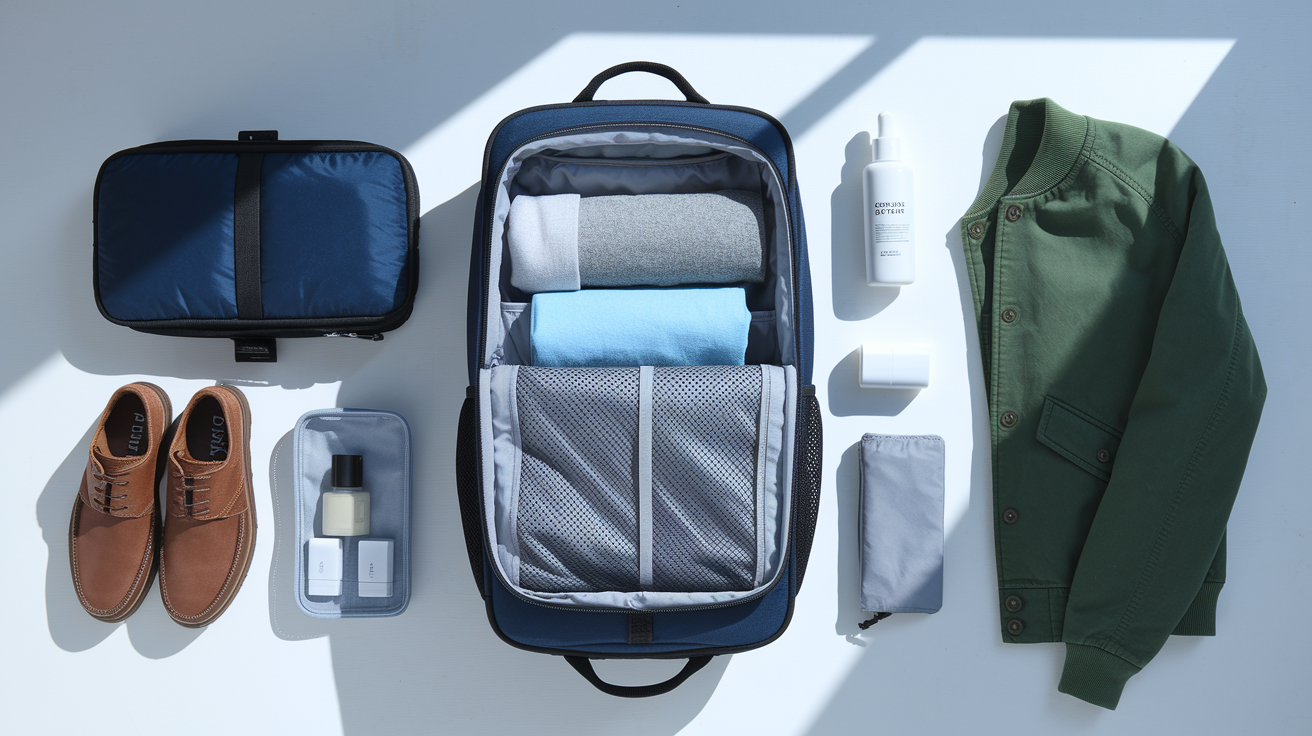
Use a compressible cabin backpack or duffel in the 28-liter range to stay comfortably within Air Canada’s 55 × 40 × 23 cm limit while maximizing internal volume. A 28-liter pack with no rigid frame will compress under the sizer and still hold a week’s worth of clothes if you pack smart. Roll clothes tightly instead of folding them flat to reduce wrinkles and save space. Place heavier items like shoes at the bottom of the bag, closest to the wheels, to keep the center of gravity low and make lifting easier.
Tactics to fit more into your carry-on:
- Use packing cubes to compress clothing and organize outfits by day
- Wear your bulkiest shoes, jacket, and heaviest layers on the plane to save bag space
- Pack toiletries in travel-size containers (≤100 ml) and keep the liquids bag accessible
- Fill dead space inside shoes with socks, chargers, or small accessories
- Choose a soft-shell bag with exterior compression straps to cinch down the load
- Limit yourself to versatile clothing that can be mixed, matched, and layered
Test your packed bag’s weight by lifting it into an overhead space at home. A closet shelf or high cabinet works. If you struggle to lift the bag smoothly with one hand, repack or remove items until you can stow it unassisted. Gate agents won’t help you lift your carry-on. If you can’t do it on your own, the bag will be checked and you’ll pay the fee.
Final Words
in the action: you have the essentials — one standard carry-on plus a personal item, the exact size limits, liquids and battery rules, and how fare class and routes change things.
Measure and test bags at home, favor compressible soft luggage, and know what fits under the seat. Note infant, medical, and pet exceptions so you don’t get surprised at boarding.
Keep these air canada carry on baggage allowances top of mind before you leave. Do the quick fit test and you’ll save time, avoid fees, and travel easier.
FAQ
Q: What does Air Canada allow for carry-on luggage?
A: Air Canada allows one standard carry-on (max 55 × 40 × 23 cm / 21.5 × 15.5 × 9 in) plus one personal item (max 33 × 43 × 16 cm / 13 × 17 × 6 in). Bags must be liftable unassisted.
Q: What are the new carry-on rules for 2026?
A: The 2026 changes keep fare-based limits: many North American Basic fares allow only one personal item; international Basic still includes one carry-on plus a personal item. Check your fare rules before booking.
Q: How strict is Air Canada with carry-on bags?
A: Air Canada is fairly strict with carry-ons; agents use metal sizers and may gate-check noncompliant bags. Expect tighter enforcement on small aircraft and busy flights, with possible gate fees for oversized items.
Q: Can you bring tweezers in carry-on Air Canada?
A: You can bring tweezers in carry-on luggage; small grooming tools like metal tweezers are allowed. Blades and larger sharp objects (razors, big scissors) are restricted—confirm with airport security if unsure.