

Think a credit card will automatically give you free extra legroom? Think again.
A few cards do, but most only help by giving credits, points, or status boosts that let you buy the upgrade.
This post cuts through the noise and names the cards that actually put you in wider seats.
We’ll show what they promise, what they really deliver, and when it’s worth chasing the perk.
If you fly often and hate cramped economy, read on to learn which cards save you money and which only sound like a win.
Top Credit Cards Offering Complimentary Extra‑Legroom Seating (Quick Summary)
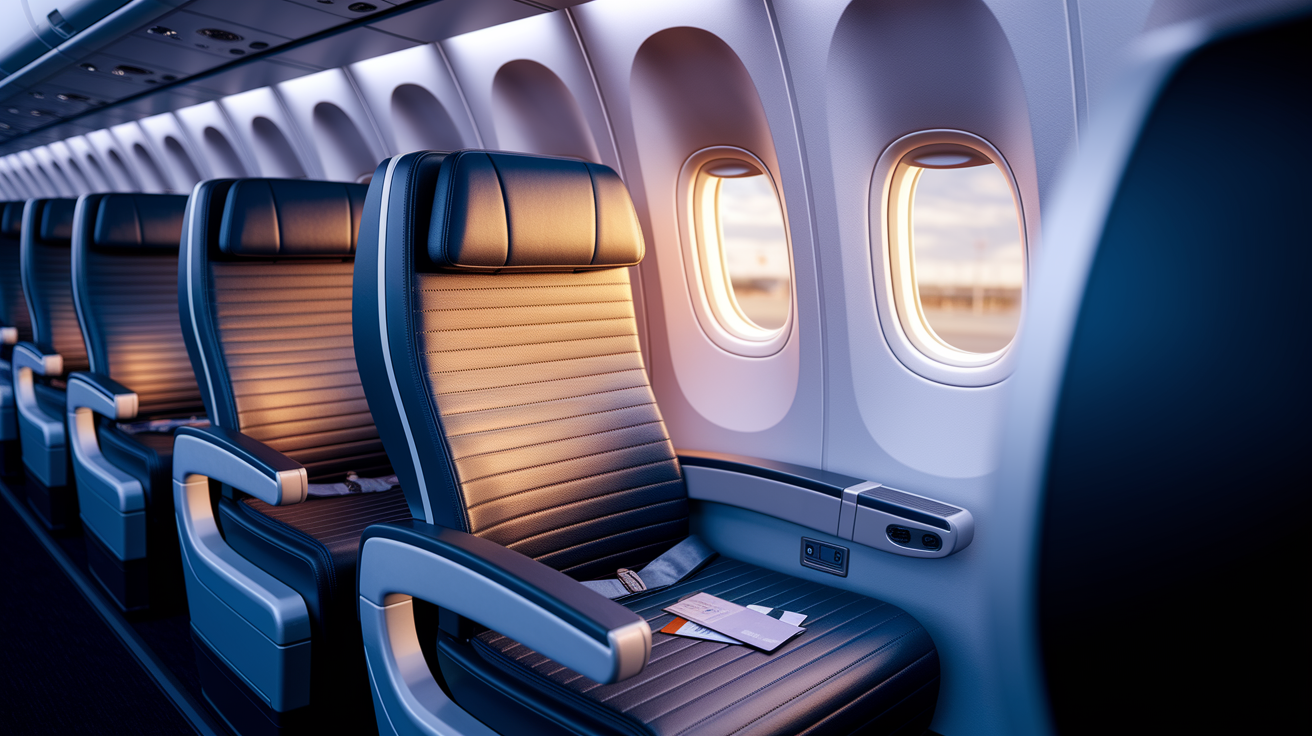
Extra‑legroom seating goes by different names. United calls it Economy Plus, Delta calls it Comfort+, American has Main Cabin Extra, JetBlue uses Even More Space. You’re looking at three to six extra inches compared to regular economy, plus things like priority boarding and first crack at overhead bins.
Most cards don’t just hand you free extra‑legroom seats for holding plastic. A few get you there through elite status shortcuts, annual upgrade credits, or statement credits you can throw at seat fees. Others let you use points or miles to grab the upgraded spot.
Here’s what actually works:
Southwest Priority / Performance Business – Starting 2026, unlimited free upgrades to Extra Legroom seats within 48 hours of departure (when space opens up); you also get automatic preferred seating at booking.
Delta Reserve (personal or business) – Access to complimentary upgrades when they’re available. You’ll want Medallion status if you need guaranteed Comfort+.
United Club Infinite – No automatic Economy Plus here. You need elite status or cash, but the card gives you travel credits you can use for seat fees.
Citi AAdvantage Executive – Main Cabin Extra usually means you’re buying it or you have elite status. Card includes Admirals Club and priority boarding.
JetBlue Plus / Business – Even More Space isn’t automatic. Use points or pay.
Chase Sapphire Reserve – $300 annual travel credit offsets extra‑legroom seat fees across any airline.
The clearest shot at truly free extra‑legroom is Southwest’s 2026 benefit or earning elite status that unlocks automatic upgrades. Most other cards give you tools (credits, points, status boosts) to make extra‑legroom affordable. But not guaranteed.
How Extra‑Legroom Seat Benefits Work for Major Airlines
Preferred seats and extra‑legroom seats aren’t the same thing. Preferred seats are standard‑legroom rows near the front or by exits that many airlines let you grab for free or a small fee. Extra‑legroom seats have measurably more pitch (usually 34 to 38 inches instead of 30 to 32) and often come with earlier boarding, dedicated overhead space, complimentary drinks on some carriers.
United Economy Plus is available automatically only to Premier members (Silver and above). Cardholders without status see Economy Plus seats blocked at booking. You pay a fee or wait until check‑in when leftover inventory might open. Delta Comfort+ works the same way: Medallion status (Silver, Gold, Platinum, Diamond) grants complimentary upgrades at booking or close to departure, but owning the card alone doesn’t unlock free Comfort+. Delta co‑branded cards require you to either pay for Comfort+ with cash or points, or earn Medallion status separately.
American’s Main Cabin Extra is reserved for elite AAdvantage members and premium‑cabin passengers. Co‑branded credit cards don’t automatically include MCE access. Cards give you preferred seat selection (rows closer to the front) and priority boarding, but MCE requires purchase or status. JetBlue’s Even More Space is similarly restricted. Cardholders can use TrueBlue points to buy Even More Space or pay cash, but the seats aren’t complimentary unless you hold Mosaic elite status.
Eligibility Requirements for Complimentary Extra‑Legroom Seating
Holding a co‑branded airline credit card improves your odds, but it rarely grants automatic complimentary seats on its own. The real unlock is elite status. Airlines release extra‑legroom inventory to their frequent flyers first, then sell or upgrade remaining seats closer to departure. Your card can speed up elite qualification by awarding bonus Medallion Qualification Dollars (MQDs), Premier Qualifying Points (PQPs), Elite Qualifying Miles (EQMs), or Tier Qualifying Points (TQPs) on everyday spending. But you still need to hit the threshold.
Some cards bundle upgrade certificates or annual travel credits that effectively pay for extra‑legroom seats. Chase Sapphire Reserve’s $300 annual travel credit and United‑branded cards’ purchase credits can offset seat fees. Southwest’s 2026 benefit is one of the few that promises unlimited free upgrades to Extra Legroom within 48 hours of departure without requiring separate elite status, as long as space is available.
Four things determine whether you’ll actually sit in extra‑legroom:
Elite‑status tier – Silver/Gold/Platinum unlocks automatic or complimentary upgrades. No status usually means no freebie.
Fare class – Basic Economy often excludes free seat selection entirely. Main‑cabin and above improve access.
Check‑in timing – Extra‑legroom seats sometimes open 24 hours before departure when elites don’t claim them.
Card type – Co‑branded airline cards accelerate status and may include upgrade allotments. General travel cards offer credits but no status boost.
Card‑by‑Card Comparison of Extra‑Legroom Benefits
Different airline credit cards deliver extra‑legroom access in different ways. Some promise upgrades when space is available, others require you to earn status separately, and a few provide credits or certificates you can apply toward seat fees.
| Card Name | Airline | Extra‑Legroom Benefit Type | Status Required | Automatic or Conditional |
|---|---|---|---|---|
| Southwest Priority / Performance Business | Southwest | Free upgrades to Extra Legroom (within 48 hrs, starting 2026) | No | Conditional (availability) |
| Delta Reserve (personal / business) | Delta | Access to complimentary upgrades | Medallion status improves odds | Conditional (availability) |
| United Club Infinite | United | No automatic Economy Plus; annual travel credits usable for seat fees | Premier status for free Economy Plus | Conditional (purchase or status) |
| Citi AAdvantage Executive | American | No automatic Main Cabin Extra; preferred seat selection | Elite AAdvantage for MCE | Conditional (purchase or status) |
| JetBlue Plus / Business | JetBlue | Use points or cash to buy Even More Space | Mosaic for complimentary Even More Space | Conditional (purchase or status) |
| Chase Sapphire Reserve | Multi‑airline | $300 annual travel credit for seat fees | No | Conditional (apply credit) |
Southwest’s 2026 benefit is the clearest promise of unlimited free upgrades to Extra Legroom, though availability isn’t guaranteed. Delta Reserve and the now‑defunct Free Spirit Travel More World Elite listed “complimentary upgrades when available,” but those upgrades depend on inventory and your position in the upgrade queue. United, American, and JetBlue cards don’t automatically grant extra‑legroom. Those seats require purchase, points, or elite status earned separately.
Redeeming Points or Perks for Extra‑Legroom Seats

If your card doesn’t unlock automatic extra‑legroom, points and credits are the next‑best route. Most airlines let you use miles or points to upgrade your seat at booking or check‑in. JetBlue TrueBlue members can apply points directly to Even More Space seats during reservation. United MileagePlus and Delta SkyMiles members can use miles to buy Economy Plus or Comfort+ on many routes, though the cost varies by flight length and demand. American AAdvantage sometimes offers mileage upgrades to Main Cabin Extra. Availability is limited and the redemption rate can be steep compared to paying cash.
Annual travel credits on premium cards often cover extra‑legroom fees outright. Chase Sapphire Reserve gives cardholders a $300 annual travel credit that posts automatically when you charge qualifying travel purchases (including seat‑selection fees) to the card. The credit works across airlines, so you can buy Economy Plus on United one trip and Comfort+ on Delta the next. United‑branded cards sometimes include a $200 United purchase credit that applies to baggage fees, seat upgrades, and other ancillary charges. Check the merchant‑coding rules before counting on the credit. Some seat fees code as “travel” while others may not trigger the reimbursement.
Flexible‑currency points (Chase Ultimate Rewards, American Express Membership Rewards, Capital One miles) can be transferred to airline partners or used through the card’s travel portal to book flights and add‑ons. If you book via the Chase portal with Ultimate Rewards points, you can select extra‑legroom seats during checkout and pay with points or the travel credit. Transferring points to an airline program sometimes unlocks better redemption rates for upgrades, especially on international routes where the cash price for premium‑economy or extra‑legroom can run over $100 each way.
Final Words
You’ve seen which co‑branded cards offer automatic extra‑legroom, which ones need elite status, and which require points or credits. The post covered top cards, how airlines split Economy Plus/Comfort+/Main Cabin Extra seats, who qualifies, and a compact card comparison.
Before you book, verify fare rules, your elite tier, and whether seats open at check‑in. Use points or travel credits when that saves money.
If you want comfort with less hassle, choose from the best credit cards that include free extra legroom seats and enjoy the flight.
FAQ
Q: What is the 2/3/4 rule?
A: The 2/3/4 rule isn’t a single airline standard; it’s traveler shorthand used for different trip choices (connections, upgrades, check‑in timing). Check the airline’s help pages or your fare rules to see the exact meaning.
Q: What’s the best credit card for airline upgrades, to buy airline tickets, or to rack up airline miles?
A: The best credit card depends on your goal: co‑branded airline cards are stronger for upgrades and elite perks, while flexible travel cards (Chase Sapphire, Amex Membership Rewards, Capital One) earn versatile points for ticket purchases and miles.