
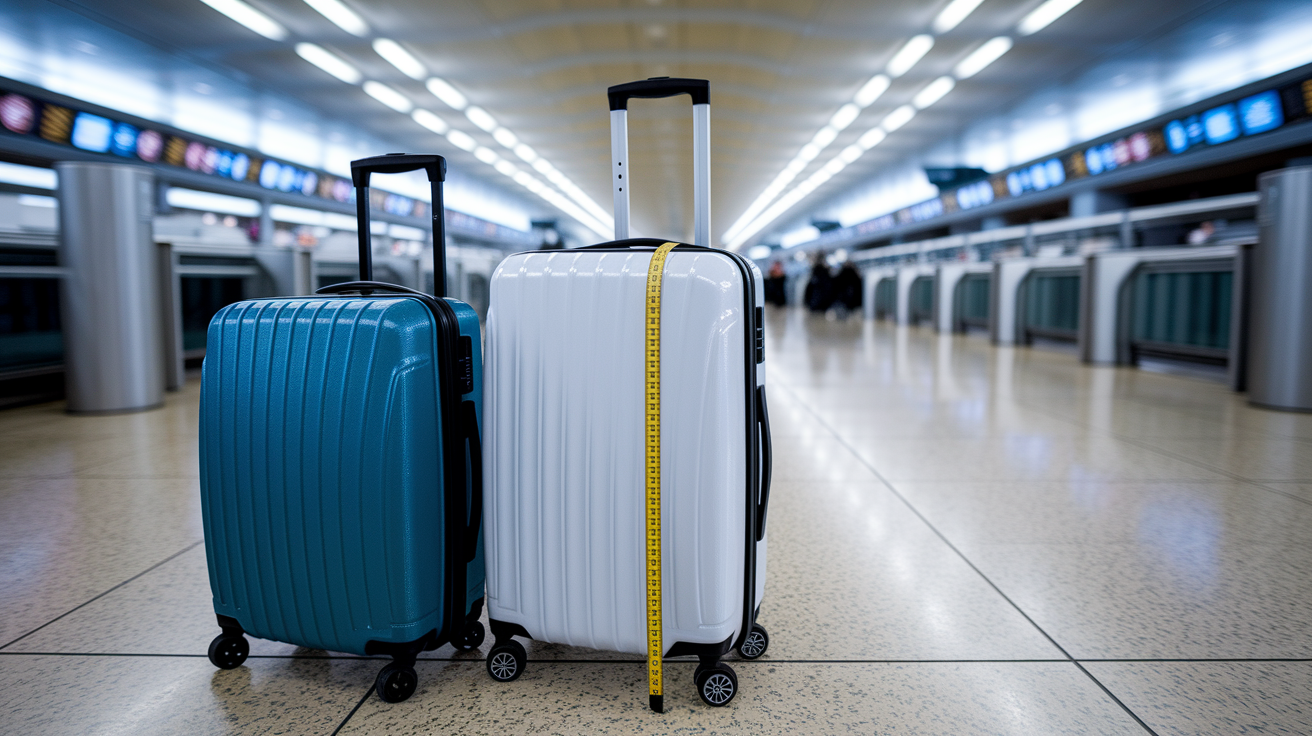

Think every airline lets the same carry-on bag on every international flight?
They’re not.
Most carriers aim for about 56 x 36 x 23 cm (22 x 14 x 9 in), but width, depth and weight rules change by region and aircraft.
This guide cuts through that confusion.
You’ll learn which dimensions matter, how linear-inch rules work, when airlines actually weigh bags, and a quick packing rule to avoid gate fees.
Read on so your bag fits the bin (literally) and you don’t end up paying or waiting at baggage claim.
Global Overview of Carry-On Size Limits on International Flights
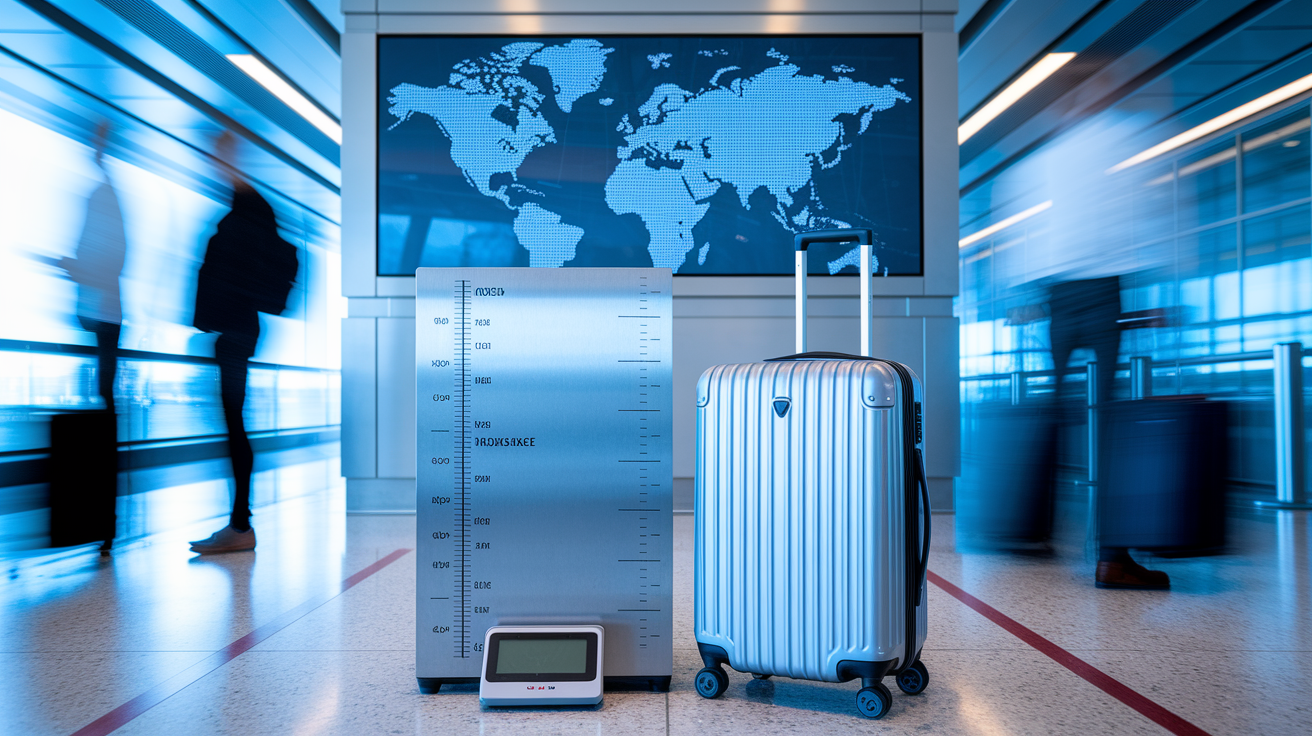
Most international airlines stick to 56 x 36 x 23 cm (22 x 14 x 9 inches) as the standard carry-on max. Weight limits? They’re all over the place. A lot of carriers flying into the U.S. don’t even post a hard weight cap. They just want to see you lift your bag into the overhead without needing a flight attendant to help. Airlines in Europe, Asia, and the Middle East usually enforce weight rules somewhere between 7 kg (~15 pounds) and 10 kg (~22 pounds), but it depends on the airport and what fare you bought.
Some airlines use linear inches instead, which is just the sum of your bag’s length, width, and height. If the rule says “45 linear inches or less,” you add the three numbers together. A bag that’s 22 + 14 + 9 inches hits exactly 45 linear inches. Fine. A bag that’s 23 + 15 + 10 inches? That’s 48 linear inches. Won’t fit. This makes enforcement faster because gate staff don’t have to check every side separately.
The most common international weight caps land between 7 kg and 10 kg, but whether anyone actually checks depends on where you’re flying. Singapore Changi will weigh your bag at security and again at the gate. Beijing and Shanghai both use 10 kg as the ceiling. If your fare rules or the airport’s security manual mention a weight limit, expect a scale before you board. When there’s no posted weight, the rule’s still simple: if you can’t lift the bag overhead without help, it’s too heavy.
| Region/Standard | Size Guideline | Weight Notes |
|---|---|---|
| Global baseline | 56 x 36 x 23 cm (22 x 14 x 9 in) | Many carriers do not specify; 7–10 kg common in Europe/Asia |
| Linear-inch rule | Sum ≤45 inches | Used by several U.S. and international carriers |
| Strict airport examples | Varies by carrier | Changi (SIN): 7 kg; Beijing/Shanghai: 10 kg |
International Carry-On Dimensions and Airline Size Variation Explained
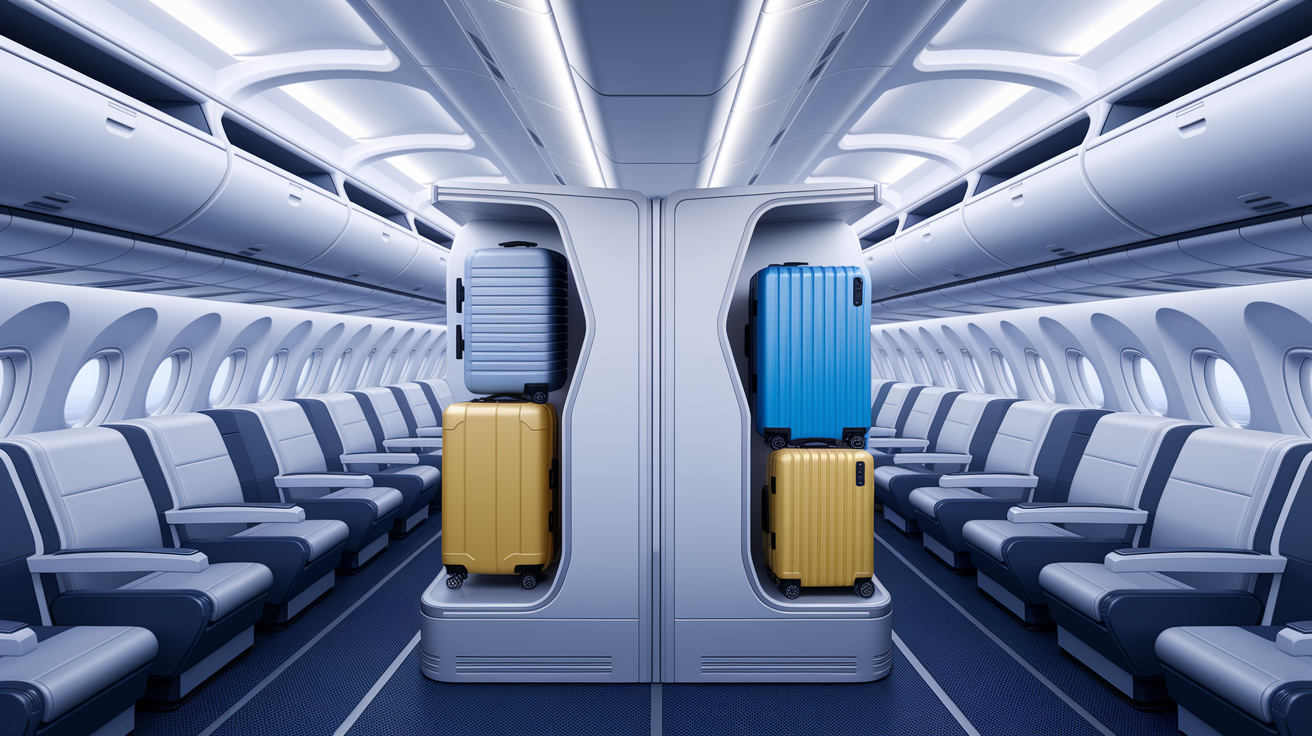
Airlines set their carry-on limits based on the overhead bins in the planes they actually fly. Narrowbody aircraft on shorter routes usually have bins that work best when your bag stands upright on its short edge. Widebody jets on long-haul routes often have deeper bins that can swallow slightly bigger or weirdly shaped bags. That’s why JetBlue lists 60 x 40 x 25 cm while Air China says 55 x 40 x 23 cm. The bin depth and hinge design just aren’t the same.
Most full-service international carriers land somewhere around 55–56 cm length, 35–40 cm width, and 20–25 cm depth. Budget airlines and regional carriers sometimes tighten those numbers to push passengers toward buying priority boarding or bigger allowances. Thai Airlines even shows two different size limits in their own chart (56 x 46 x 25 cm on some routes, 56 x 35 x 22 cm on others), which usually means different planes or codeshare deals. When you book a flight operated by multiple carriers under a codeshare, the operating airline’s bin size is what matters, not the marketing airline’s rules.
| Airline | Dimensions (cm) | Special Notes |
|---|---|---|
| Air China | 55 x 40 x 23 | Standard across fleet |
| All Nippon Airways (ANA) | 55 x 35 x 25 | Slightly narrower width |
| Korean Air | 55.88 x 35.56 x 22.86 (≈22 x 14 x 9 in) | Matches common U.S. standard |
| JetBlue | 60 x 40 x 25 | Larger allowance; fee applies on some fares |
| Thai Airways | 56 x 46 x 25 / 56 x 35 x 22 | Varies by route or aircraft type |
When your trip includes multiple airlines, like a U.S. domestic leg followed by an international connection, always pack for the strictest segment. A bag that clears American’s 22 x 14 x 9 rule might not fit Korean Air’s narrower 35.56 cm width. Packing to the smallest common size stops you from getting hit with a surprise gate-check and the fees or delays that come with it.
Weight Restrictions for International Carry-On Bags and Enforcement Differences
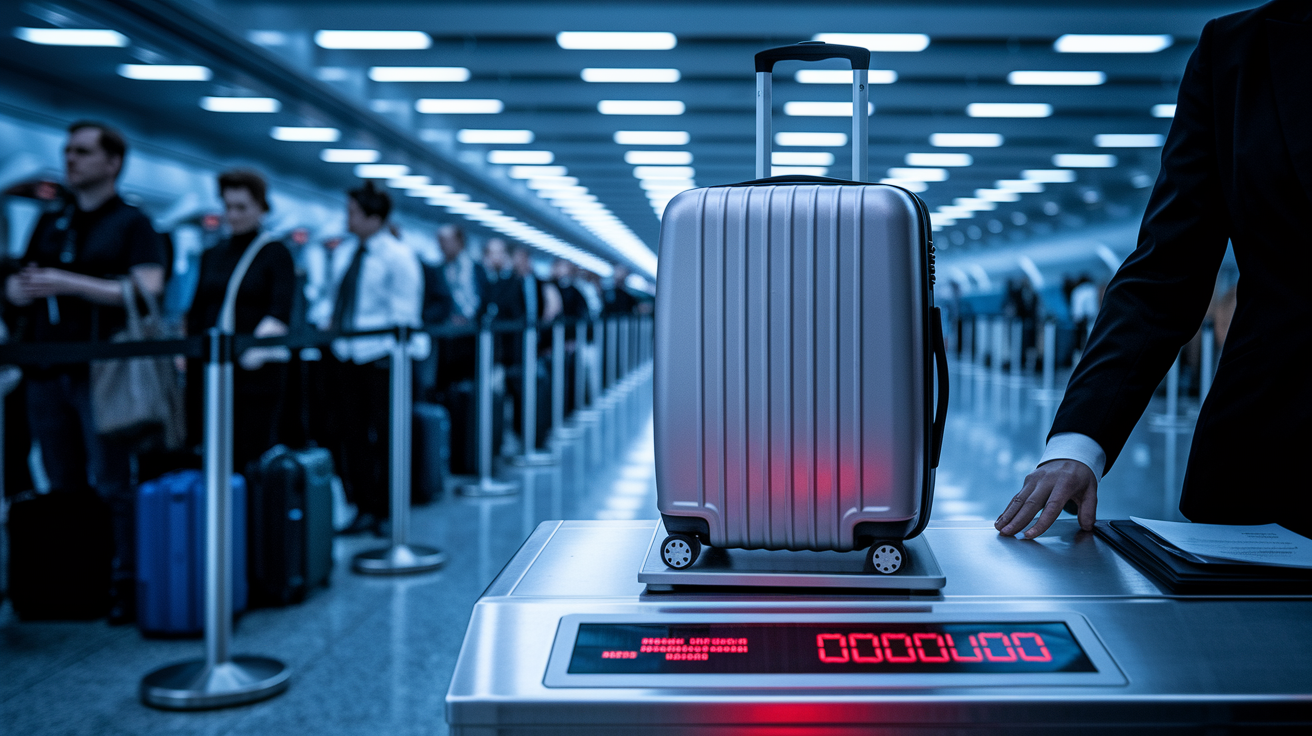
A lot of U.S. carriers don’t list a carry-on weight limit in their contract of carriage. They figure overhead bins and common sense will keep things reasonable. European, British, and Asian airlines usually publish explicit maximums (7 kg to 10 kg is typical) and put scales at check-in, security, and boarding gates. Budget carriers enforce weight strictest because their whole business model runs on selling checked-bag add-ons and premium cabin upgrades.
U.S. domestic and transatlantic routes rarely weigh your carry-on unless it looks stuffed or the flight’s full and agents think bin space will run out. In Europe and UK airports, EasyJet, Ryanair, and British Airways subsidiaries weigh carry-ons at the gate almost every time. Expect enforcement to match the posted limit (often 15 pounds or 6–7 kg on budget fares). Asia-Pacific hubs like Singapore, Beijing, and Shanghai enforce posted weight ceilings at security or boarding. Scales sit right next to the gate podium. Premium cabin and higher fare classes often get bigger weight allowances (sometimes up to 50 pounds on carriers like British Airways), but the size dimensions stay the same. Even when there’s no weight specified, if you can’t lift your bag into the bin without help from crew or another passenger, the bag’s too heavy and staff can make you check it.
If your bag’s over weight or size at boarding, the airline treats it as checked luggage. That means mandatory gate-checking, possible checked-bag fees (sometimes charged on the spot at walk-up rates), and waiting at baggage claim after you land. On tight connections, a gate-checked bag might not make your next flight, leaving you without essentials until it catches up. International budget carriers are the least forgiving. Expect no warnings and instant fees when you’re over.
Measuring Carry-On Bags Correctly for International Compliance
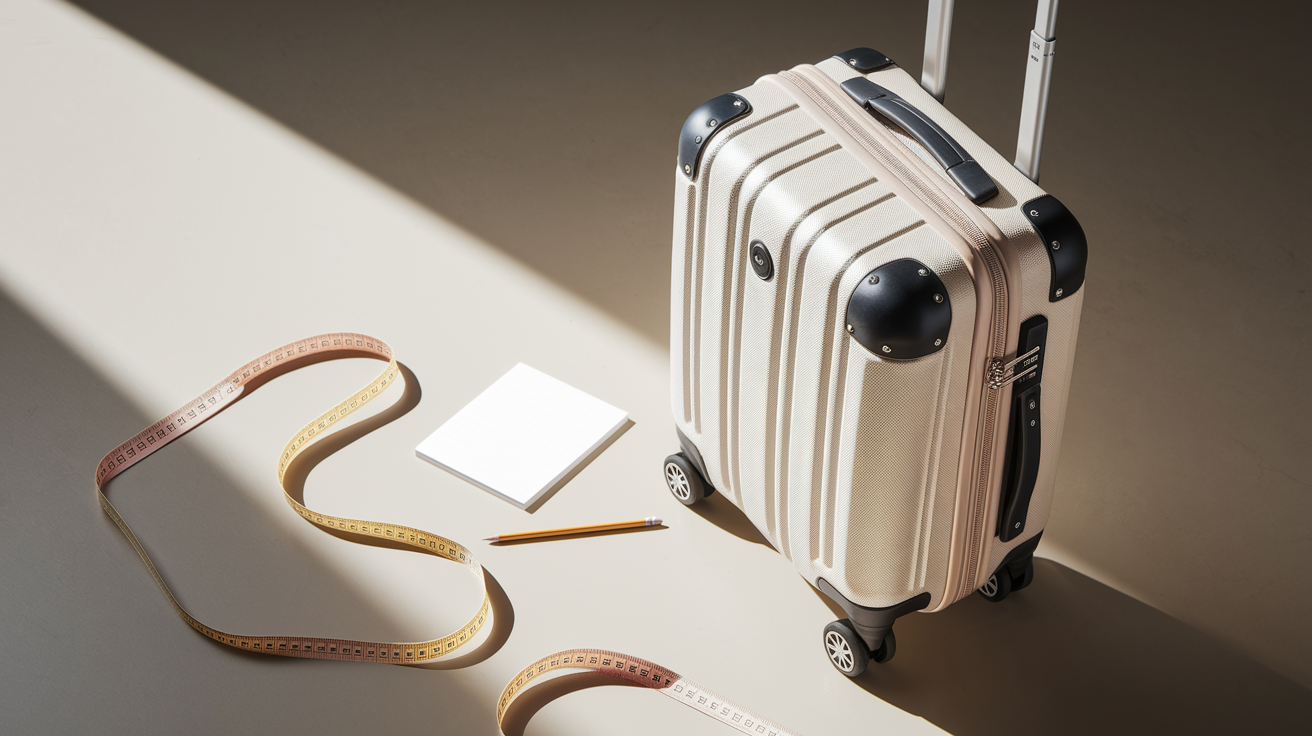
Use a flexible tape measure and measure the longest points of your bag, including wheels, handles, exterior pockets, and any zippers or straps sticking out. Airlines design their sizer boxes (those metal frames at check-in and gates) to account for these parts, so your measurement at home should match that approach. Measure length (the bag’s longest side when it’s standing upright), width (the narrowest side), and depth (front to back), then write those numbers down before you compare them to the airline’s published limits.
To check compliance with a linear-dimension rule, add length + width + depth. If the airline says “45 linear inches maximum” and your bag’s 22 + 14 + 9 inches, you’re at exactly 45 inches. Acceptable, but no margin. A bag that’s 23 + 15 + 10 inches totals 48 linear inches. Fails. Round up fractional inches. Don’t assume half an inch won’t matter when staff use a sizer box that won’t close if your bag’s even slightly over.
Lay the bag flat on the floor and measure length from bottom to top, including wheels and feet. Measure width across the bag’s widest point, including side handles or external straps. Measure depth from the front face to the back, including any laptop sleeves or external pockets sticking out. Write the three numbers and add them to verify linear-inch compliance if the airline uses that rule.
Personal Item Size Rules and Under‑Seat Storage on International Flights
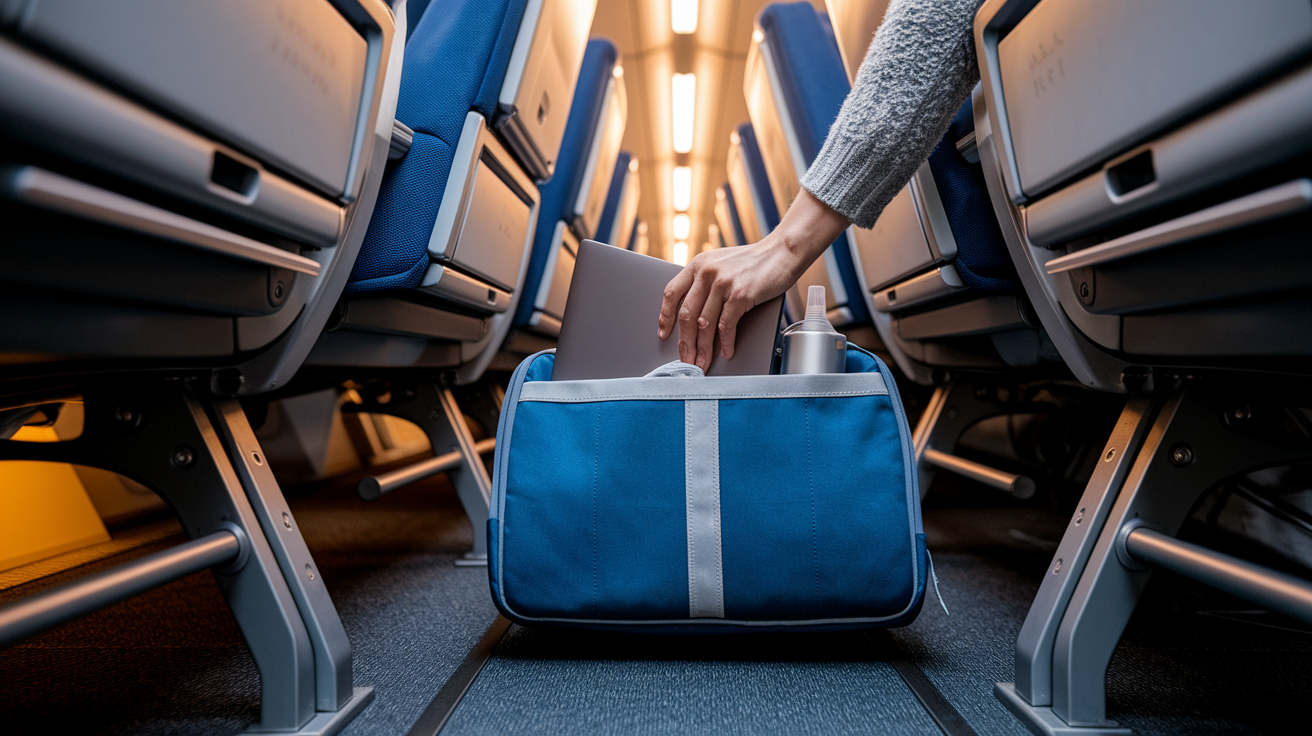
Most international airlines let you bring one carry-on bag plus one personal item, but what counts as a “personal item” varies. Full-service carriers typically accept a purse, laptop bag, small backpack, or briefcase that fits under the seat in front of you. Budget airlines sometimes require your personal item to fit entirely inside your main carry-on, or they charge extra to bring a second cabin item. When you book a fare labeled “basic economy” or “light,” read the baggage section carefully. Some of these fares only let you bring one total cabin item, and it has to fit under the seat, not in the overhead bin.
Under-seat space is smaller and less standardized than overhead bins. A safe max for international personal items is roughly 40 x 30 x 15 cm (16 x 12 x 6 inches), though the actual space depends on seat pitch and the seat frame design. Bulkhead and exit-row seats often don’t have under-seat storage because regulations require the floor area to stay clear. If you’re in one of those seats and your personal item won’t fit in the overhead bin next to your main carry-on, you’ll need to consolidate or check something.
International flights enforce the same liquid and prohibited-item rules for personal items as for carry-ons. If you’re carrying a tote bag with a bottle of water bigger than 100 ml, security will take it no matter which cabin item holds it. Medications, baby formula, and breast milk are exempt from the 100 ml rule, but you have to declare them at security and you might need documentation. Keep your personal item organized so you can quickly pull out laptops, liquids, and electronics during screening.
Typical under-seat size ceiling is 40 x 30 x 15 cm (16 x 12 x 6 in). Common acceptable personal items include laptop bag, purse, small backpack, camera bag. Budget-airline caveat: some carriers count personal item and carry-on as a single allowance, so confirm before boarding. Bulkhead and exit-row restriction: no under-seat storage on many aircraft, so the overhead bin’s your only option.
International Liquids, Electronics, and Prohibited Items Rules for Carry-On Bags
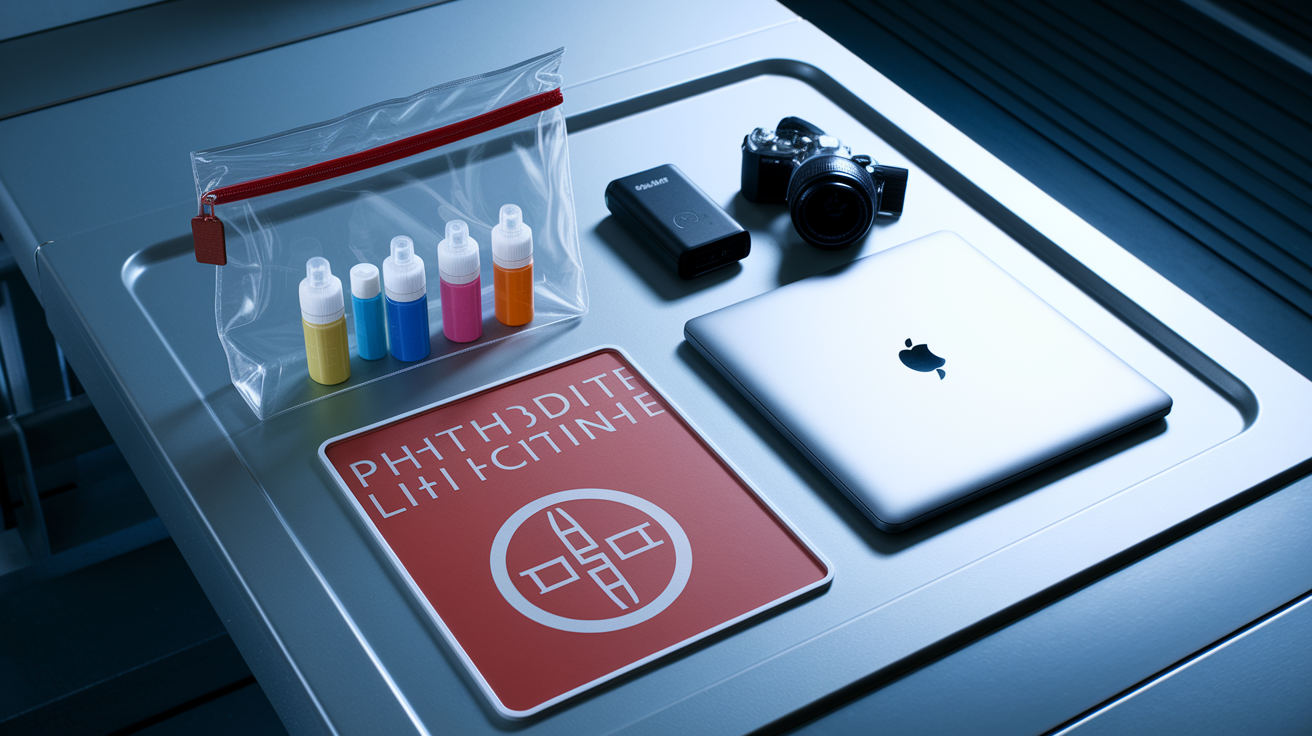
All liquids, gels, aerosols, and pastes in your carry-on have to be in containers of 100 ml (3.4 ounces) or less, and all containers have to fit inside a single clear, resealable plastic bag no bigger than one liter. Each passenger gets one liquids bag. Security screening in most countries follows this rule, though a few airports let you carry slightly larger containers when you’re connecting from another international flight without re-clearing security. Medications, baby formula, and expressed breast milk are exempt from the 100 ml limit but you have to declare them at the checkpoint and they might get extra screening or require proof.
Liquids and gels: containers 100 ml or smaller, carried in one clear plastic bag per passenger. Electronics: laptops, tablets, and cameras are fine in cabin bags. Lithium batteries have to stay in the cabin and can’t go in checked luggage. Sharp objects: knives, box cutters, scissors with blades longer than 6 cm, and tools are banned in the cabin. Flammable items: lighters (one per person in some regions), matches (totally banned in some countries), aerosol sprays over certain sizes. Firearms and explosives: strictly prohibited in carry-on. Firearms can be checked under specific declaration and storage rules. Certain chemicals and compressed gases: check your airline’s dangerous-goods list. Lots of common items (camping fuel, spray paint, oxygen canisters) are banned.
Laptops, tablets, and power banks with lithium batteries have to travel in the cabin because cargo holds don’t have fire-suppression systems built for lithium fires. Some airlines and countries require you to remove laptops from your bag during X-ray screening. Others use advanced scanners and let electronics stay inside. Spare lithium batteries (the ones not installed in a device) have to be in your carry-on with terminals protected. Tape over the contacts or keep them in original packaging to stop short circuits. Power banks over 100 watt-hours are usually banned completely, and those between 100 and 160 watt-hours need airline approval before you fly.
Enforcement of prohibited-item rules gets tighter at international checkpoints, especially in regions with recent security incidents. If security confiscates something, you usually can’t get it back or mail it home. The item gets destroyed. Double-check your airline’s and your departure country’s prohibited-items list before you pack. When you’re not sure, put the item in checked luggage or leave it at home.
Packing Strategy to Meet International Carry-On Limits
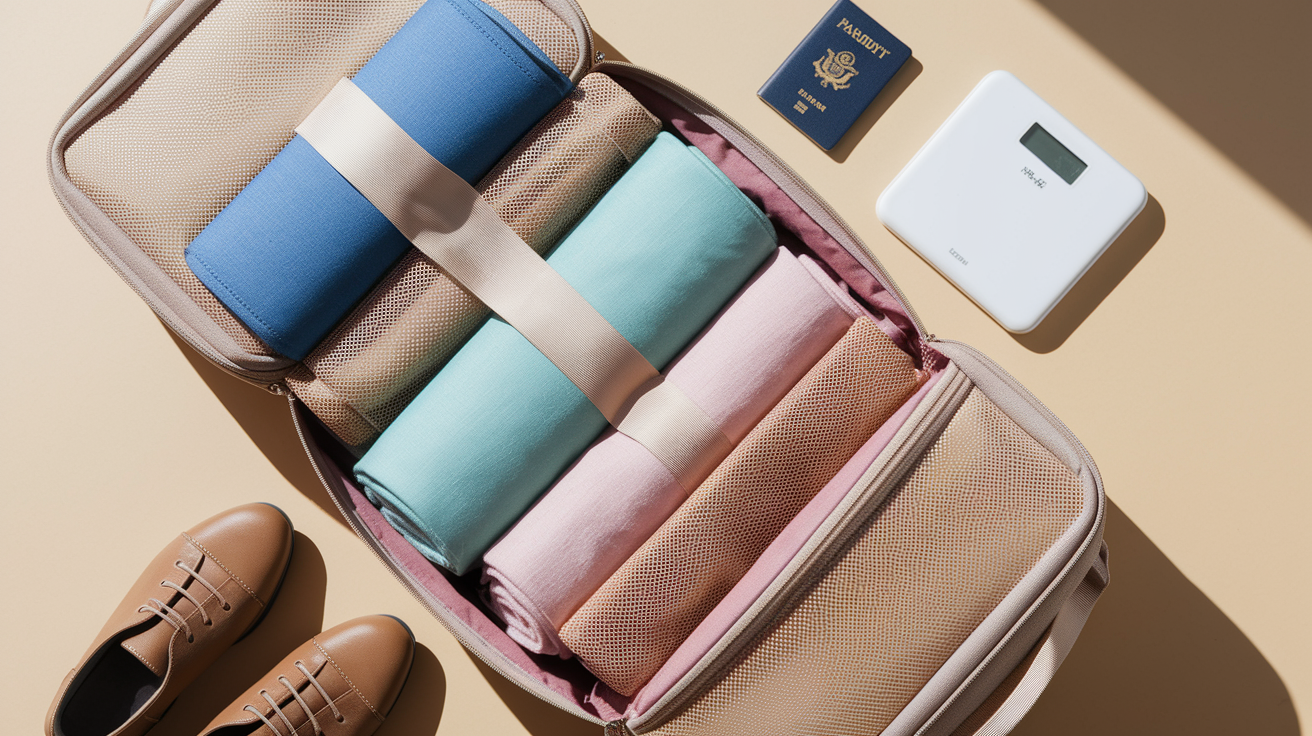
Pick a bag that fits under the strictest limit you’ll hit on your trip. If one segment allows 22 x 14 x 9 inches and another enforces 21.5 x 15.5 x 7.5 inches, buy or borrow a bag that fits the smaller rule. Lightweight bags (models weighing around 600 grams or 1 lb 5 oz) leave more of your weight allowance for clothes and gear, especially when you’re flying through airports that enforce 7 kg limits. Hard-sided spinners usually weigh more empty than soft-sided duffels or backpacks, so think about weight when you’re choosing between luggage types.
Compression packing cubes cut clothing volume by 20–30 percent when you press out extra air, letting you fit more into the same bag footprint. Roll heavy stuff like jeans and jackets tightly, then pack them along the bag’s longest edge to keep legal dimensions when the bag gets measured. Keep your liquids bag, laptop, and travel documents in an exterior pocket or the top layer so you can grab them fast at security without unpacking everything.
Use a lightweight bag (under 1 kg empty) to keep more weight free for your stuff. Pick dimensions that meet the strictest carrier on your trip, not the most lenient one. Confirm that wheels, handles, and external pockets are included in the measurement when you’re comparing bags. Keep liquids in a single clear bag at the top of your carry-on so they’re easy to reach during screening. Put heavy or bulky items at the bottom or along rigid edges to stop the bag from bulging past legal dimensions. Use compression cubes to shrink clothing volume and keep things organized. Double-check your total weight on a home scale before you leave for the airport, especially when you’re connecting through weight-enforcing hubs.
| Item | Space-Saving Benefit |
|---|---|
| Compression packing cubes | Reduce clothing volume by 20–30%, keep items organized, prevent shifting during handling |
| Lightweight bag (under 1 kg) | Frees 1–2 kg of weight allowance for contents; easier to lift into overhead bins |
| Roll-top closures or expandable zippers | Allow temporary compression for screening, then expand slightly for easier packing at destination |
Multi-Airline and Multi-Region Itinerary Considerations for Carry-On Limits
When your ticket involves multiple carriers (especially a U.S. domestic leg connecting to an international long-haul flight), the operating airline on each segment enforces its own carry-on rules. A bag that fits fine on United’s domestic flight might be too wide or too heavy for the Japan Airlines flight you board three hours later. Codeshare partnerships add another layer. The flight number on your boarding pass might show one airline’s code, but the aircraft, crew, and baggage rules belong to the operating carrier. Always verify the operating airline’s carry-on policy, not just the marketing carrier’s, before you pack.
Airports with international connection security checks sometimes apply stricter enforcement than your origin airport. If you clear U.S. TSA screening with a bag that technically exceeds another country’s size limit, you might face a gate-check or fee when you land and connect through that country’s security checkpoint. European budget carriers measure and weigh bags at the gate routinely, even when your inbound long-haul flight didn’t check. Safest move for multi-airline trips? Pack to the smallest and lightest limit across all segments.
Booking separate tickets (instead of a single through-ticket) increases carry-on risk because you lose the protection of interline baggage agreements. If the first airline forces you to gate-check your carry-on because of space constraints, you’ll collect it at baggage claim, then re-check it on the next carrier, possibly paying two separate fees. When you buy separate tickets, assume each airline will apply its rules independently and plan for the strictest scenario. If your connection time’s short and the second carrier has a tighter carry-on allowance, you might need extra time to consolidate items or repack at the airport.
Regional Variations: U.S., EU/UK, Asia-Pacific, Middle East & Latin America Cabin Rules
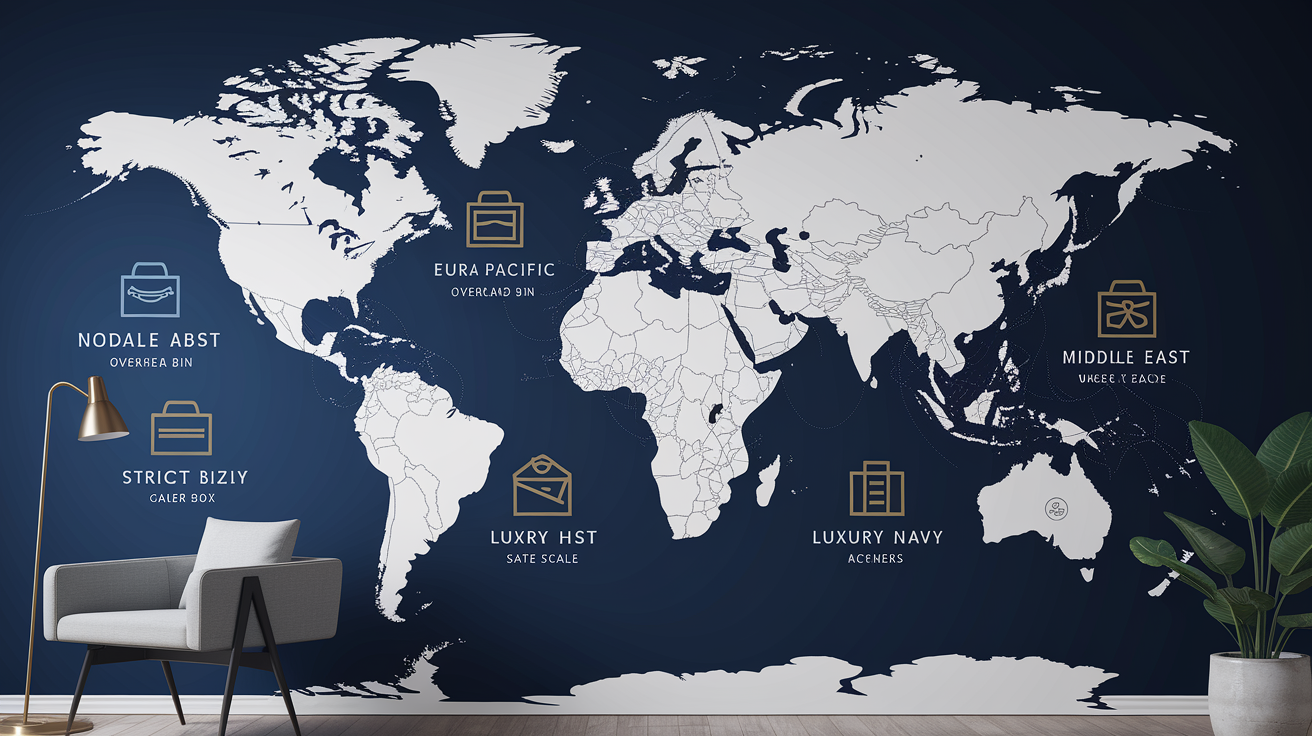
U.S. airlines focus carry-on enforcement on TSA security screening instead of weight. Most don’t publish a hard weight ceiling and rarely weigh bags at the gate unless the flight’s oversold and bin space is tight. Trade-off is that U.S. carriers tend to board more carry-ons than other regions, which leads to frequent announcements asking passengers to gate-check bags when overhead bins fill. Dimensions usually follow the 22 x 14 x 9-inch standard, and enforcement is lightest on domestic routes, stricter on international departures.
EU and UK airlines enforce both size and weight more consistently. Budget carriers like Ryanair and EasyJet use strict limits (Ryanair’s max is 21.5 x 15.5 x 7.5 inches, enforced at almost every gate) and charge fees for bigger cabin bags or priority boarding that guarantees overhead space. Full-service European carriers typically allow 55–56 x 40 x 20 cm but put bags on scales at check-in or the gate, especially when flying to or from weight-sensitive airports. British Airways lets premium cabins carry higher weight (up to 50 pounds), but the dimensions stay consistent across all classes.
Asia-Pacific airlines enforce weight limits at major hubs like Singapore Changi (7 kg), Beijing Capital (10 kg), and Shanghai Pudong (10 kg). Security staff put scales at boarding gates, and enforcement is consistent no matter what fare class you bought, though business and first-class passengers might get a second cabin bag allowance. Size dimensions cluster tightly around 55 x 35–40 x 20–25 cm. Middle Eastern carriers like Emirates and Qatar Airways publish generous carry-on allowances (often 7 kg in economy, higher in premium cabins) but enforce them hard at their hub airports, where gate staff use sizer boxes and scales. Latin American carriers vary widely. Some follow U.S.-style lenient enforcement, others adopt European-style strict weighing, depending on the country’s aviation authority and the airline’s operating model.
U.S. and Canada: Rare weight checks, enforcement focuses on dimension compliance and bin availability. Expect more leniency on domestic routes. EU and UK: Frequent weighing at budget carriers and on full flights. Strict size enforcement using sizer boxes at gates. Asia-Pacific: Weight limits enforced at major hubs (7–10 kg common). Dimensions tightly standardized across carriers. Middle East: Generous published limits but tough enforcement at hub airports. Premium cabins get higher allowances. Latin America: Inconsistent enforcement. Verify each carrier’s policy and expect variability between countries.
Final Words
Use 56 x 36 x 23 cm (22 x 14 x 9 in) as your baseline—measure with wheels and handles and check linear inches. We explained how to measure, where weight limits matter, and what typically gets enforced.
Remember enforcement varies by region, so pack to the strictest segment, keep liquids under 100 ml, and treat the personal item as truly under-seat.
When in doubt, re-measure and follow the strictest rule on your itinerary. Knowing carry on size limits for international flights saves you gate fees and stress—and makes travel simpler.
FAQ
Q: Do international flights have different carry-on sizes?
A: International flights do sometimes use different carry-on sizes: a common global standard is 56 x 36 x 23 cm (22 x 14 x 9 in), but some airlines and regions enforce tighter dimensions or weight limits—check before travel.
Q: What are the new rules for carry-on luggage in 2026?
A: The new rules for carry-on luggage in 2026 aren’t universal: the usual 56 x 36 x 23 cm (22 x 14 x 9 in) remains common, but some carriers tightened weight or enforcement—always verify the airline and airport rules.
Q: What toiletries are not allowed on a plane?
A: Toiletries not allowed on a plane include liquids over 100 ml in carry-on, flammable items (nail polish remover, large aerosols), and hazardous or sharp tools; medications and baby formula are exceptions with screening.
Q: Can I take a 22 inch carry-on international?
A: A 22-inch carry-on can be taken internationally: 22 x 14 x 9 in matches the common standard, but some airlines or low-cost carriers enforce smaller limits or sizer boxes—follow the strictest segment on your itinerary.