
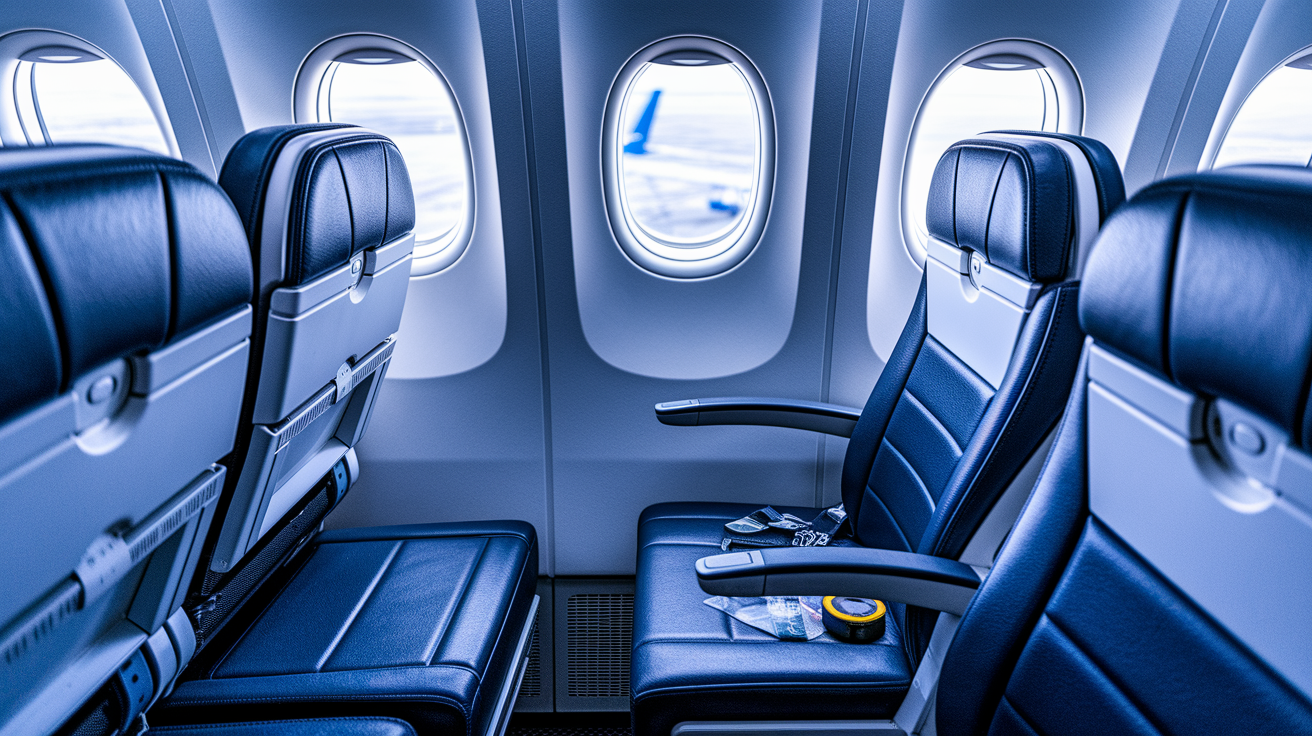

Think exit row automatically gives more legroom? Think again.
Seat-pitch numbers don’t tell the full story.
Bulkheads, seat-shell thickness, where the tray table sits, and different seat makers change how much room your knees really get.
So there’s no universal winner: exit rows often offer more straight-ahead legroom, but premium economy can feel roomier overall because of wider shells and better recline.
Read on for the quick checks that actually show which seat frees up your knees on a real flight.
Understanding Advanced Factors Behind Seat Space Variability
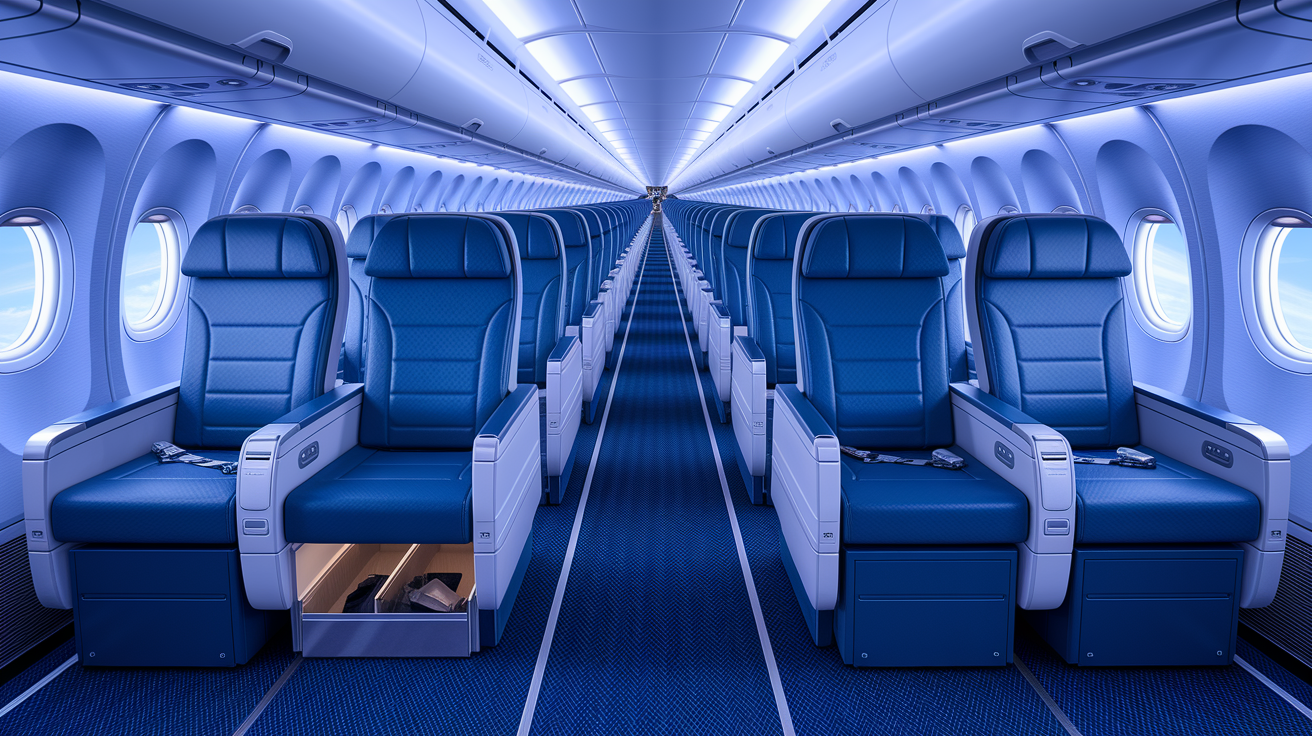
Seat pitch gives you the distance between rows, but it won’t tell you how much room your knees actually get. You can have two seats with the same 38-inch pitch that feel nothing alike.
Why? Bulkhead placement. Seat-shell thickness. Where the tray table and screen got mounted. Airlines don’t all buy from the same seat maker. Some use Recaro, others go with B/E Aerospace or Zodiac. So you’ll find cabins where a 34-inch seat from one vendor gives you more knee space than a 35-inch seat from another. It comes down to seat-back curvature and how the hinge was designed.
Exit rows and premium-economy sections make this even messier. You’re getting extra pitch, sure, but you’re also dealing with structural changes. Bulkheads up front. Reinforced frames. Fixed armrests. All of that can add or subtract inches of usable space even when the official number stays put.
Premium-economy seats usually have thicker cushions and wider shells. That sounds nice, but it eats into whatever pitch gain you thought you were getting. The trade-off is better ergonomics and more consistent recline. Exit-row seats, especially the ones next to doors, often stick the tray table and entertainment module inside fixed armrests. That narrows the seat by an inch or two and shifts your legroom to the sides instead of straight ahead.
Bulkheads in front of premium or exit sections kill your under-seat storage. And they can put a rigid wall closer to your knees than a normal seatback would sit. So a 38-inch pitch measurement ends up giving you less clearance than a well-designed 36-inch row without that wall.
Here’s what actually affects your legroom beyond the pitch number:
Bulkhead impact – That fixed wall ahead removes the flexible seatback curve and blocks under-seat stowage. You lose knee space even when pitch goes up.
Fixed seat shells – Thicker seatbacks with built-in entertainment housings push the effective knee barrier forward. The gap shrinks despite longer pitch.
Seat-track placement – Tracks mounted higher or farther forward change the angle and position of the seat. Your legs fit differently under the row ahead.
Armrest and tray-table design – In-armrest trays and screens add width to the seat structure. That narrows the usable sitting area and limits hip and thigh room.
Manufacturer hinge geometry – Different recline mechanisms and pivot points mean one seat’s “upright” position sits farther forward than another’s. The row behind it gets compressed.
Final Words
You now know why identical seat pitch doesn’t mean identical legroom. Structural features—bulkheads, fixed seat shells, armrest and tray‑table placement, seat‑track location and hinge geometry—can cut usable space. Extra‑legroom variants may add 4–10″, but design choices often decide how much of that you actually get.
When weighing exit row vs premium economy which gives more legroom, focus on usable width, recline, and rules (tray tables, exit access). Pick the option that matches your body and priorities, and you’ll travel more comfortably.
FAQ
Q: Does premium economy get more leg room?
A: Premium economy provides more legroom than standard economy, typically offering 2–6 inches extra seat pitch and wider seats with better recline; exact amounts vary by airline and aircraft.
Q: Why don’t people want to sit in the exit-row?
A: People avoid exit-row seats because they often have fixed armrests, no under-seat storage during takeoff/landing, extra responsibility to assist in emergencies, and reduced recline or awkward tray/armrest placement.
Q: Do exit rows get more leg room?
A: Exit rows often provide more legroom for emergency egress—sometimes 4–10 extra inches—but usable space varies if armrests, tray tables, or fixed seat shells reduce width or knee clearance.
Q: Which airlines have the worst leg room?
A: Airlines with the worst legroom are usually ultra-low-cost carriers (like Spirit, Frontier, Ryanair) and tightly packed basic-economy cabins, often with 28–30 inch seat pitch; always check published pitch before booking.