
Think basic economy is a harmless bargain? It usually isn’t.
Many cheap fares quietly add bag fees, block seat choice, and lock you out of changes.
This post shows clear, repeatable rules to avoid the fees and restrictions airlines don’t advertise.
Do this before you search, check the true total cost, then protect the booking.
Simple fixes include packing to personal-item sizes, using the right airline card, and checking in at the 24-hour mark to keep the savings without risking a sunk fare.
What Basic Economy Really Is and the One Rule You Can’t Bypass

Basic economy showed up around 2012 when legacy carriers needed to compete with ultra-low-cost airlines. You’re sitting in the same seat, on the same plane, eating the same pretzels as everyone else who paid more. What’s different is everything that happens before you board and after you land.
The seat is identical. The restrictions live in baggage rules, when you can pick that seat, where you stand in the boarding line, and what happens when your plans change.
Most carriers let you cancel a basic economy ticket for free within 24 hours of booking. That window closes, and the ticket becomes locked. You can’t move your flight. You can’t get your money back. Miss the flight or have plans fall apart, and you lose what you paid.
This is the restriction that hurts most. Alaska Saver fares, American Basic Economy, United Basic Economy, JetBlue Blue Basic… they all work this way. Delta lets you cancel for a fee and keep eCredits in some cases, but you’re still forfeiting $99 domestic or $199 international. Southwest ditched basic economy entirely and offers free changes across the board, which makes them the outlier.
If you need flexibility, basic economy is almost never the right move. You’re saving $15 to $40 each way on domestic routes. That $30 to $80 roundtrip discount disappears the second your meeting gets moved or a family emergency forces a new plan.
Practical Tactics to Sidestep the Worst Restrictions
Basic economy comes with limits, but they’re not the same across airlines. Different carriers enforce different rules, and knowing where those boundaries sit helps you avoid the restrictions that actually matter.
Pack to Personal Item Dimensions on Strict Carriers
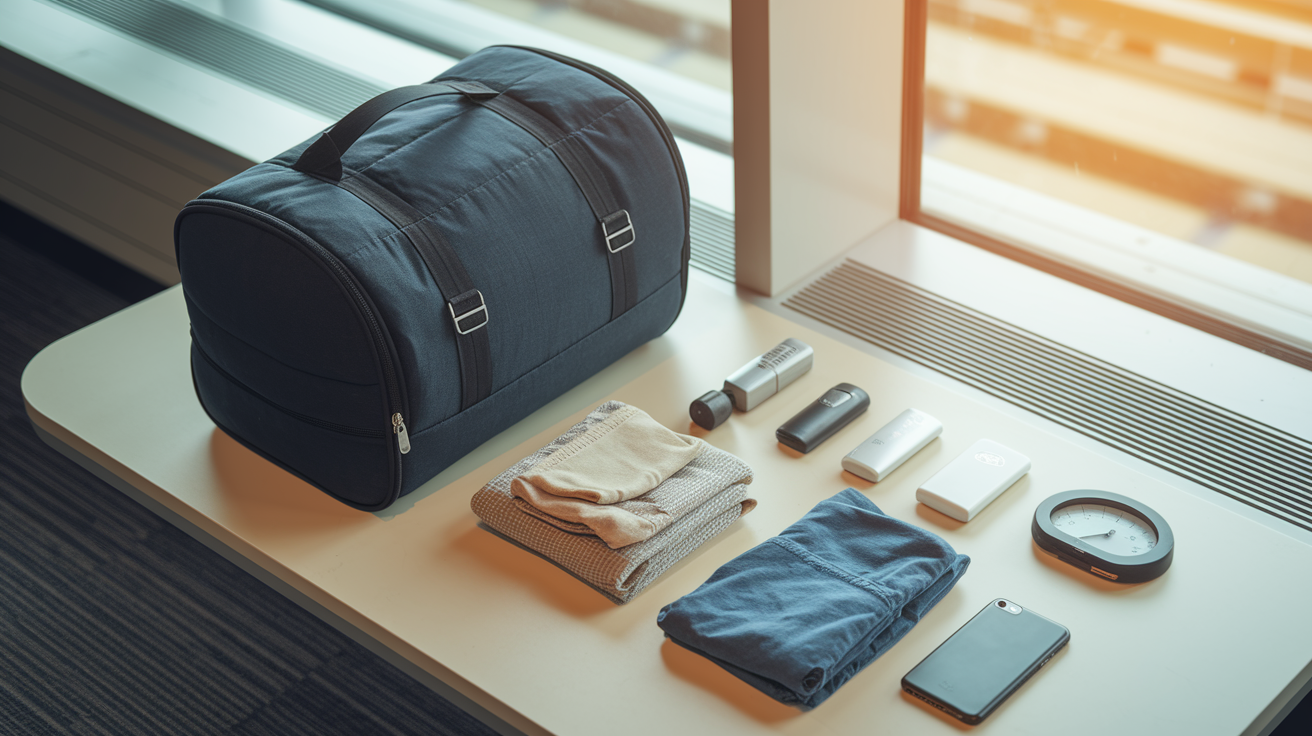
United and JetBlue ban full-size carry-ons on most domestic basic economy routes. You get one personal item that fits under the seat.
United says 9 inches × 10 inches × 17 inches. JetBlue allows 17 inches × 13 inches × 8 inches. Show up with a roller bag and gate agents will make you check it. United charges $30 each way for the first checked bag domestically, $75 each way to Europe. JetBlue charges $35 domestic, $65 to London. JetBlue also hits you with a $65 penalty if you try to sneak a carry-on onto certain routes.
The fix is straightforward: bring a soft-sided backpack or tote that compresses to fit. Pack shoes, toiletries, change of clothes. Three-day trip? Totally workable. Week-long with formal clothes or winter gear? You’re going to struggle.
JetBlue does allow carry-ons on transatlantic flights to London, Paris, Amsterdam, even on Blue Basic. United allows carry-ons on basic economy to Europe. If your route falls here, you get back the packing flexibility that makes basic economy tolerable.
Delta, American, Alaska all allow full-size carry-ons on basic economy. That removes one of the biggest hidden costs and makes these fares more viable for short trips where you’re not checking luggage.
Use Airline Credit Cards to Reclaim Checked Bag Benefits
Can’t fit everything into a personal item? Next question is whether you can avoid paying to check a bag.
Most airline credit cards waive the first checked bag fee. How it works varies by carrier, and the difference matters when you’re deciding if the card’s annual fee is worth it.
Delta SkyMiles cards require you to hold the card and add your SkyMiles number to the reservation. You don’t need to pay for the ticket with the card. The Delta SkyMiles Gold card has a $0 intro fee first year, then $150. One roundtrip with a checked bag saves $60 in fees. Two roundtrips and you’re breaking even after year one.
American AAdvantage cards work the same. Link the card to your AAdvantage account and the first checked bag is free on domestic flights. You also move to Group 4 boarding, which cuts the risk of being forced to gate-check a carry-on because overhead space is gone. The Citi AAdvantage Platinum Select card is $99 annually. Similar math to Delta.
United cobranded cards require payment with the card to unlock the checked bag benefit. Book through a third-party site or pay with a different card and you lose it. United Explorer card is $0 intro first year, then $95. Fly United more than twice a year and check bags, the fee covers itself.
Alaska Atmos Rewards Ascent Visa Signature cards require you to book the flight with the card. When you do, the cardholder and up to six additional passengers on the same reservation get a free first checked bag. Alaska charges $35 first bag, $45 second. Traveling with family? Savings stack quickly.
Southwest cobranded cards restore one free checked bag for the cardholder and up to eight guests on the same reservation. Southwest introduced a new Basic fare for bookings made after a certain date in 2025, which removed free checked bags from the lowest tier. Card benefit brings it back.
The card only makes sense if you check bags often enough to offset the annual fee. Fly twice a year, check one bag each way, you save $60 to $70 annually. If the card’s fee is $95 or $150, you need three to four trips to break even. Rarely check bags? Skip the card and stick to carry-on packing.
Check In the Moment the Window Opens
Most U.S. carriers open online check-in 24 hours before departure. Basic economy passengers who check in right away often get better seat assignments than those who wait.
Delta typically assigns seats at check-in or at the gate. Check in at the 24-hour mark and the system may give you an aisle or window. Wait until the airport and you’re more likely ending up in a middle seat in the back.
American assigns seats at check-in and often sticks basic economy passengers in middle seats. Checking in early doesn’t guarantee aisle or window, but your odds improve compared to showing up at the gate with no assignment.
JetBlue allows free seat selection within 24 hours of departure for Blue Basic passengers. Care about sitting near the front or avoiding middle seats? Set a reminder and grab your seat the second the window opens.
United doesn’t allow online check-in for basic economy passengers. You have to check in at the airport with an agent or kiosk. The restriction exists to verify you’re complying with the personal item only rule. Because you can’t check in online, you can’t select a seat in advance, even within 24 hours. Seat gets assigned at the airport. You have zero control.
Early check-in also matters for boarding order. Even though basic economy passengers board last, checking in early can improve your seat assignment and reduce the chance overhead bins are full by the time you step on the plane.
Cost Context: When the Savings Are Real and When They Vanish

Basic economy saves money only when you avoid the fees and restrictions that erase the discount.
Alaska Saver fares typically save $15 to $30 each way compared to Main Cabin. Roundtrip domestic might cost $60 less in Saver. Pack a personal item, don’t check a bag, that $60 stays with you. Need to check one bag? You’re paying $35 each way, $70 roundtrip. Saver fare now costs you $10 more than if you’d booked Main Cabin in the first place.
American charges roughly $35 each way to upgrade from Basic Economy to Main Cabin on domestic routes. That’s about $70 roundtrip to get back seat selection, ability to change your ticket, higher elite-qualifying credit. Know you won’t change your flight and can live with a middle seat? The $70 savings is real. Any chance your plans shift and that $70 you saved becomes a sunk cost the moment you need to rebook.
Delta commonly charges around $80 roundtrip to avoid Basic Economy on domestic routes. The upcharge rises to $150 or more on international flights. Early December 2021, Delta stopped awarding SkyMiles and Medallion Qualifying Miles, Segments, Dollars on basic economy fares. Working toward elite status or care about earning miles? Delta basic economy is now poor value even when the fare is cheaper.
JetBlue Blue Basic restricts you to a personal item on most domestic routes. Checked bags cost $35 each way domestic, $65 to London. Save $40 on the base fare but need to check a bag? You lose $30 of that savings immediately. Check a bag both directions and you’re now paying $20 more than you would have on a standard fare.
United Basic Economy bans carry-ons on most domestic routes. Checked bag costs $30 each way domestic, $75 to Europe. Basic economy fare saves you $40 each way but you check one bag, you break even. Check a bag both directions, you pay $20 more than the standard fare. United also doesn’t allow online check-in, doesn’t allow upgrades, assigns seats at the airport. The friction often outweighs the modest fare discount.
Southwest has no basic economy product. Two checked bags included, changes and cancellations are free. When Southwest serves your route, the decision is often simple: book Southwest unless another carrier is significantly cheaper and you’re certain you won’t need to change your flight.
Airline-by-Airline Breakdown: Where the Loopholes Live
Each carrier enforces basic economy differently. The differences aren’t subtle, and knowing which rules apply to your ticket determines whether you can avoid fees or whether the fare is a trap.
Alaska Airlines (Saver Fares)
Saver fares save $15 to $40 each way. Full-size carry-ons allowed. You board in the final group. Alaska eliminated complimentary seat selection on Saver fares in July 2022. Seats now assigned at check-in. You can’t pick your seat in advance unless you pay.
Changes and cancellations aren’t allowed after the 24-hour booking window closes. Award upgrades prohibited. Complimentary elite upgrades possible starting roughly two hours before departure, but availability is limited.
Checked bag fees are $35 first bag, $45 second. Hold an Alaska Atmos Rewards Ascent Visa Signature card and book the flight with that card? First checked bag is free for the cardholder and up to six additional passengers on the same reservation.
Saver fares earn miles and status credits at the same rate as Main Cabin, which preserves some value for frequent flyers.
Deciding to book Saver hinges on whether you can travel with a carry-on and accept a seat assignment at check-in. Need advance seat selection or ability to change your flight? The $30 to $80 you save booking Saver isn’t enough to offset the restrictions.
American Airlines (Basic Economy)
Basic Economy available on all domestic routes and many international markets: Canada, Caribbean, Central America, Europe, Mexico, South America.
Full-size carry-ons allowed. Seats assigned at check-in. You typically get a middle seat. Board last, Group 8 or 9. Changes and refunds not allowed after the 24-hour booking window.
American Basic Economy earns AAdvantage miles and status, but elite-qualifying credit is often reduced. On some routes you earn half the Elite Qualifying Miles and Segments compared to standard economy.
Checked bags cost $30 each way domestic, $75 to Europe. Hold an American AAdvantage cobranded credit card and tie the card to your AAdvantage account? First checked bag is free on domestic flights. You also move to Group 4 boarding, which increases the chance of finding overhead bin space.
Seat selection available for a fee starting around $9 to $10 each way. Traveling with family and need to sit together? Paying for seats in advance can add $18 to $40 roundtrip per person. At that point the fare savings from Basic Economy often disappear.
American Basic Economy makes sense for solo travelers on short trips with firm plans who can tolerate a middle seat and don’t need to check bags.
Delta Air Lines
Delta Basic Economy doesn’t allow advance seat assignments. Seats assigned at check-in or at the gate. Carry-ons allowed, but you board in Group 8, which means overhead bin space is often gone by the time you reach your row. Bins full? Gate agents will force you to check your carry-on at the gate. The bag gets checked for free, but you lose access to your belongings during the flight and wait at baggage claim after landing.
Changes not allowed after the 24-hour booking window. Cancellations possible for a fee. You forfeit $99 on domestic or $199 on long-haul international and receive an eCredit for remaining value. eCredit expires after one year.
Early December 2021, Delta stopped awarding SkyMiles and Medallion Qualifying Miles, Segments, Dollars on basic economy fares. Most punitive frequent flyer policy among U.S. legacy carriers. Care about elite status or earning miles? Delta Basic Economy is a poor choice regardless of fare discount.
Delta typically charges around $80 roundtrip to upgrade from Basic Economy to Main Cabin on domestic routes. International routes, the upcharge often exceeds $150 roundtrip. Given the loss of earning and risk of forced gate-checks, the upcharge is often justified.
Delta cobranded credit cards restore some value. Hold a Delta SkyMiles card and add your SkyMiles number to the reservation? You receive a free first checked bag and priority boarding. Priority boarding reduces risk of losing overhead bin access, the primary operational downside of Delta Basic Economy.
Delta SkyMiles Gold card charges $0 first year, then $150 annually. Fly Delta more than twice per year and check bags? Card pays for itself.
JetBlue (Blue Basic)
Blue Basic introduced late 2019. Prohibits carry-ons on most domestic routes. You’re allowed one personal item that fits under the seat. JetBlue defines personal item as 17 inches × 13 inches × 8 inches.
Carry-ons allowed on transatlantic flights to London, Paris, Amsterdam, even on Blue Basic fares. Route includes these destinations? Carry-on restriction doesn’t apply.
JetBlue enforces a $65 penalty if you attempt to bring a carry-on onto a route where it’s prohibited. Gate agents check bag sizes before boarding.
Checked bags cost $35 each way domestic, $65 to London. Save $40 booking Blue Basic but need to check one bag? You lose most of the savings. Check a bag roundtrip and you pay more than you would have on a standard fare.
Seat selection available for a fee at booking. Free seat selection opens 24 hours before departure. Check in at the 24-hour mark and you can pick any available seat at no charge. Wait and your options narrow.
Changes and cancellations allowed for a fee. JetBlue charges $100 to change or cancel a domestic Blue Basic ticket, $200 for South America or London. Changes and cancellations free within 24 hours of booking.
Blue Basic earns TrueBlue points at reduced rate: 2 points per dollar spent, compared to 6 points per dollar on other fares.
JetBlue Blue Basic is viable for short trips where you can pack everything into a personal item and don’t need advance seat selection. Any trip requiring more than a weekend’s worth of clothing? The carry-on restriction and checked bag fees make standard fares better value.
Southwest Airlines
Southwest doesn’t offer a basic economy product. Two checked bags included with every fare. Changes and cancellations free. You receive a travel credit for the ticket value, credits don’t expire.
Southwest historically used open seating, where passengers chose seats after boarding based on boarding position. Open seating continues through January 26, 2026. Assigned seats begin January 27, 2026.
Southwest introduced a new Basic fare for bookings made after a certain date in 2025. Basic fare eliminates free checked bags, prohibits same-day changes, reduces points earning. Hold a Southwest cobranded credit card? The card restores one free checked bag for the cardholder and up to eight guests on the same reservation.
Southwest’s lack of change fees and included baggage makes it the default choice for many domestic travelers when the airline serves the route. Even after introduction of the Basic fare, Southwest remains more flexible than basic economy products offered by other legacy carriers.
United Airlines (Basic Economy)
United Basic Economy is widely considered the most restrictive among U.S. carriers.
On most domestic routes and shorter international flights, you’re limited to one personal item. Full-size carry-ons not allowed. United defines personal item as 9 inches × 10 inches × 17 inches. Bring a standard roller bag and gate agents will force you to check it. First checked bag costs $30 each way domestic, $75 to Europe.
Carry-ons allowed on basic economy tickets to Europe. Route includes a transatlantic flight? Carry-on restriction doesn’t apply.
United doesn’t allow online check-in for basic economy passengers. You have to check in at the airport with an agent or kiosk. Restriction is intended to verify you comply with the personal item only rule. Because you can’t check in online, you can’t view or select seat assignments in advance, even within 24 hours of departure. Your seat gets assigned at the airport.
Changes and refunds not allowed after the 24-hour booking window. In some cases United may issue a partial travel credit if you cancel, but the credit is typically less than original ticket price, and fees apply.
United Basic Economy earns MileagePlus miles at standard rate. You earn Premier Qualifying Points but not Premier Qualifying Flights, which limits your progress toward elite status. Complimentary upgrades not allowed.
Hold a United cobranded credit card and you can waive the first checked bag fee, but only if you pay for the ticket with that card. Book through a third-party site or pay with a different card and you forfeit the benefit. United Explorer, United Business, United Quest, United Club cards all offer some version of the checked bag waiver, though specific allowance and guest limits vary by card.
United Basic Economy makes sense only for very short trips where you can pack everything into a backpack, your plans are firm, and you don’t care about seat assignment or online check-in. For most travelers, the restrictions outweigh the fare savings.
Cost-Benefit Analysis: When to Buy Basic Economy and When to Pay More

Basic economy delivers real savings when your trip fits a narrow set of conditions. Outside those conditions, the fare discount gets offset by fees, restrictions, or operational friction.
Example 1: Solo Traveler, Firm Plans, Carry-On Only
You’re flying roundtrip Seattle to Los Angeles on Alaska for a two-night work trip. Saver fare is $180 roundtrip. Main Cabin is $240 roundtrip. You’ll pack a carry-on, won’t check a bag. Your meeting schedule is fixed. You won’t need to change your flight.
The $60 fare difference is real. You save $60 booking Saver. Carry-on is allowed, so you avoid checked bag fees. You board last, but overhead bin space is usually available on a short flight like this. Can’t pick your seat in advance, but you’re traveling alone and don’t care whether you sit window, aisle, or middle.
In this case, Saver is the better choice. The restrictions don’t affect you. The savings are meaningful.
Example 2: Family of Three, Must Sit Together, Checked Bags Likely
You’re flying roundtrip Chicago to Orlando on American with your spouse and child. Basic Economy fare is $150 per person roundtrip, $450 total. Main Cabin is $220 per person roundtrip, $660 total. You’ll check one bag for the family and want to ensure you sit together.
Basic Economy doesn’t allow advance seat selection. Seats assigned at check-in. Families often get split apart. To guarantee sitting together, you’d need to pay for seat assignments, around $9 to $10 each way per person. For three people, that’s $54 to $60 roundtrip.
You also need to check one bag. First checked bag costs $30 each way, $60 roundtrip.
Total added costs: $114 to $120.
Basic Economy fare was $450. Main Cabin was $660. After adding seat fees and a checked bag, your all-in cost for Basic Economy is $564 to $570. Main Cabin is $660, which includes seat selection at booking, ability to change your flight if needed, higher elite-qualifying credit.
The difference is now $90 to $96 instead of $210. For that $90 you gain flexibility and avoid the stress of being separated from your child on the plane. Most families choose Main Cabin in this scenario.
Example 3: International Trip, Need Flexibility
You’re flying roundtrip New York to London on United. Basic Economy fare is $450 roundtrip. Standard Economy is $650 roundtrip. You expect you may need to change your return date depending on how meetings go.
United Basic Economy doesn’t allow changes. Plans shift and you forfeit the entire $450 or pay $75 each way to check a bag and receive a partial credit at best.
Standard Economy allows free changes. Need to move your return flight? You simply rebook without penalty.
The $200 fare difference gets wiped out the moment you need flexibility. In this case, Standard Economy is better value.
Non-Negotiable Restrictions and the Limits of Credit Card Workarounds
Credit cards restore some value to basic economy by waiving checked bag fees and improving boarding position. They don’t eliminate the core restrictions.
You can’t use a credit card to regain advance seat selection on most basic economy fares. Delta assigns seats at check-in or the gate. American assigns seats at check-in. United assigns seats at the airport. Holding a cobranded card doesn’t change this.
You can’t use a credit card to make a basic economy ticket changeable. Alaska, American, United prohibit changes after the 24-hour booking window. Delta allows cancellations for a fee. JetBlue allows changes for $100 to $200. No card benefit alters these policies.
You can’t use a credit card to restore full elite-qualifying credit on carriers that have reduced or eliminated it. Delta stopped awarding SkyMiles and Medallion Qualifying credits on basic economy in December 2021. American often awards half the Elite Qualifying Miles and Segments. The card doesn’t fix this.
You can’t use a credit card to allow carry-ons on routes where they’re prohibited. United bans carry-ons on most domestic basic economy routes. JetBlue bans carry-ons on most domestic Blue Basic routes. The card gives you a free checked bag, but it doesn’t allow you to bring a roller bag onto the plane.
Credit cards reduce the financial penalty of checking bags and improve your boarding position, which reduces risk of forced gate-checks. They don’t restore the flexibility or convenience that standard economy provides.
Verify Policy Effective Dates Before You Book

Airline policies change mid-year. The fare you buy today may operate under different rules than the fare you bought six months ago.
Alaska eliminated complimentary seat selection on Saver fares in July 2022. Bought a Saver ticket before that date? You could pick a seat at the back of the plane for free. Bought a Saver ticket after July 2022? Seats are assigned at check-in. You can’t choose in advance.
Delta stopped awarding SkyMiles and Medallion Qualifying credits on basic economy in early December 2021. Bought a basic economy ticket before that date and you earned miles. Bought after and you earned nothing.
JetBlue launched Blue Basic in late 2019 and later tightened carry-on allowances on many routes. The rules you read in an article from 2020 may no longer apply to tickets purchased in 2024 or later.
One carrier added complimentary carry-on to its basic fare effective September 6, 2024. Another announced tier structure changes on May 15, 2025, with rebranding for flights starting October 1, 2025.
Federal fee-disclosure rules were finalized on April 24, 2024, but implementation faced legal delays. Proposed family-seating protections appeared on August 1, 2024. Some carriers changed carry-on or tier rules on September 6, 2024, and May 15, 2025, with some changes effective October 1, 2025.
When you’re comparing fares, verify the policy details you’re reading match the effective dates for your ticket. Airline websites and third-party booking sites often display outdated information. The fare rules shown at time of purchase are the rules that apply to your ticket, even if the airline changes its policies after you book.
Screenshot the fare details at time of booking. Dispute arises and you have documentation of what was disclosed when you paid.
Decision Checklist: Five Questions to Answer Before You Book
Use this checklist to decide whether basic economy fits your trip.
1. Can you pack everything into a personal item or a single carry-on?
If your airline bans carry-ons on basic economy, you need to fit everything into a personal item. United and JetBlue enforce this on most domestic routes. Can’t pack that light? Basic economy will force you to pay for a checked bag, which often erases the fare savings.
2. Do you need advance seat selection or must you sit with travel companions?
Most basic economy fares assign seats at check-in or at the gate. Families traveling with children often get split apart. If sitting together is non-negotiable, you’ll need to pay for seat assignments or book a standard fare.
3. Is there any chance you’ll need to change or cancel your flight?
If your plans aren’t firm, basic economy is a poor choice. Most carriers prohibit changes entirely. Delta and JetBlue allow changes for fees that often exceed the amount you saved by booking basic economy in the first place.
4. Do you care about earning miles or elite-qualifying credit?
Delta doesn’t award miles or status credit on basic economy. American awards reduced credit. JetBlue awards points at a lower rate. Working toward elite status or rely on miles for future travel? Basic economy often delivers poor value.
5. Does the all-in cost still favor basic economy after adding fees?
Calculate the total cost: base fare plus checked bags plus seat fees plus the value of lost flexibility. If the gap is less than $40 to $60 roundtrip, standard economy is usually the better choice.
Answer yes to all five questions and basic economy may work. Answer no to two or more? Pay for a standard fare.
Final Words
You learned a repeatable flow: prepare before you search, set smart filters, and compare the true total cost (fare + bags + seats). Do the basic checks so you don’t buy a ticket you can’t change.
Use quick “worth it” tests: if savings are under $40 and you need a checked bag, basic economy usually isn’t worth it. Check award space before you transfer points.
Use these steps every time and you’ll get better at how to avoid fees and restrictions with basic economy tickets. Safe travels.
FAQ
Q: What are the restrictions of a basic economy fare?
A: The restrictions of a basic economy fare include no ticket changes or refunds, limited or no seat selection (airline may assign seats at check-in, often separating companions), lower boarding priority, and no upgrades or elite perks.
Q: Are airlines now charging for checked bags?
A: Airlines are charging for checked bags on most domestic economy fares; typical first-bag fees run $30–$60 each way, though some credit cards, elite status, or international tickets still include free checked bags.
Q: Is it better to do basic economy or economy?
A: Choosing basic economy or regular economy depends on savings versus needs; if your savings are under $40, or you need a checked bag, seat selection, or flexibility, regular economy is usually the better pick.