


Think a $50 cheaper flight from a different airport is an instant win?
Not always. Ticket price is just one piece—add bags, rideshare or parking, tolls, and the value of extra travel time.
If the savings still beat those costs and the schedule gives you backups, the alternate airport can pay off.
This post walks you through the quick math and practical rules I use so you can tell, in minutes, whether a different airport will actually save you money.
How to Evaluate Whether Using an Alternate Airport Is Worth It

The simplest way to decide if an alternate airport makes sense is calculating your total door-to-door cost. Not just the ticket price. Add up the flight fare, baggage fees, parking or rideshare to the airport, tolls, and any extra expenses like an overnight hotel if early departure times force you to stay nearby. Then assign a dollar value to your time. Most travelers use $20 to $40 per hour. Multiply that by any extra travel hours the alternate airport adds. If the alternate airport’s ticket savings exceed all those extra costs, it’s worth considering.
Time matters as much as money. A secondary airport 90 minutes farther from your home might offer a ticket $100 cheaper, but if the extra three hours of round-trip driving costs you $90 in time value plus $30 in gas, your real savings drop to $20. For a solo business trip, that’s probably not worth the hassle. For a family of four sharing one car? Those costs get divided, and suddenly the alternate airport makes more sense.
Convenience factors tip the balance when costs are close. If the cheaper airport forces you onto a 6 am departure that requires a 3:30 am wake-up, or if it only flies your route twice a week instead of daily, those constraints might outweigh modest savings. Same goes if the alternate airport is served exclusively by an ultra-low-cost carrier that nickel-and-dimes you for carry-ons and seat selection. Run the math on total trip cost before assuming you’ve found a deal.
Quick evaluation steps:
Map the driving distance and typical travel time to each airport at your departure hour. Compare ticket prices and add all fees (bags, seats, priority boarding) to get the true fare. Estimate ground transport costs (gas, tolls, rideshare, parking per day) for the full trip duration. Assign a dollar value to your time and calculate the cost of any extra travel hours. Subtract total extra costs from ticket savings. If the result is positive and above your minimum threshold (commonly $25 to $50 for budget travelers, $75 to $150 for others), the alternate airport is worth it.
Price Differences and Hidden Travel Costs to Consider
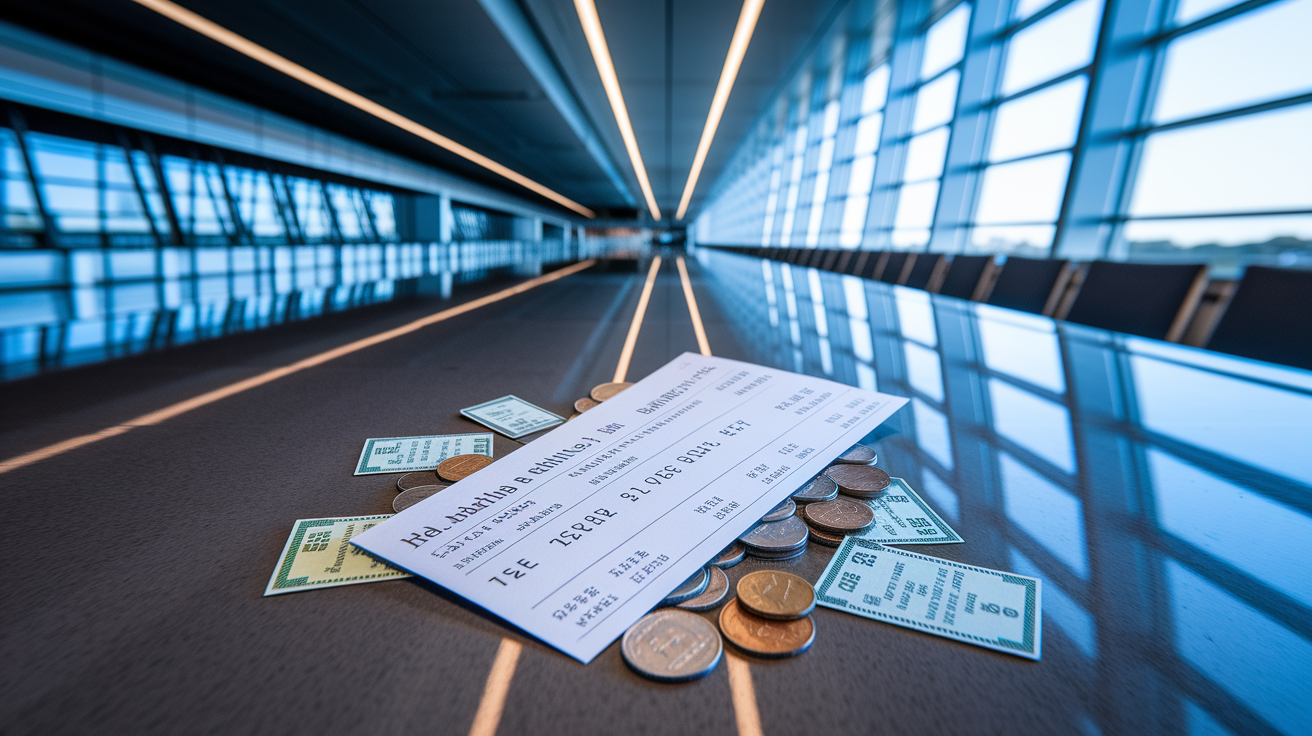
Flight fare differences between airports in the same metro area can range from $30 to over $300, especially when a low-cost carrier operates from the secondary field. Smaller airports often host airlines like Allegiant, Frontier, Spirit, or Avelo, which advertise base fares well below legacy-carrier prices. But the base fare is only the starting point. Budget carriers typically charge $35 to $60 each way for a carry-on, $30 to $80 per checked bag, and $10 to $50 for seat selection. A $99 advertised ticket can become $220 after fees, which might match or exceed the all-in price at your primary airport on a traditional carrier that includes a carry-on and seat assignment.
Ground transportation and parking fees compound quickly. If the alternate airport sits 50 miles farther away, expect to spend an extra $30 to $60 in gas and tolls round-trip, depending on your vehicle and current fuel prices. Rideshare costs scale with distance. Figure $1.50 to $3.00 per mile plus base fees and airport surcharges. An extra 40 miles each way can add $80 to $120 to your total trip cost. Parking rates vary widely: economy lots at major hubs typically run $15 to $30 per day, while smaller airports may charge $8 to $20 per day. On a week-long trip, even a $5 daily difference adds up to $35. But if the cheaper airport requires a $60 round-trip Uber instead of a $15 public-transit ride, you’ve lost money.
| Cost Category | Typical Range | Notes |
|---|---|---|
| Flight fare difference | $30–$300+ | Include all baggage, seat, and priority fees in comparison |
| Parking (per day) | $8–$30 | Multiply by trip length; off-site lots may save $5–$10/day |
| Rideshare or fuel + tolls | $0.50–$1.00/mile driving; $1.50–$3.00/mile rideshare | Calculate round-trip distance; add airport surcharges ($3–$10) |
| Public transit | $2.50–$15 each way | Check if alternate airport has transit access or requires shuttle |
Time Savings vs. Time Trade-Offs When Using Alternate Airports

Smaller airports often let you arrive 60 to 90 minutes before a domestic flight instead of the two hours recommended at major hubs. Security lines are typically shorter, terminals are compact, and you can walk from curb to gate in under 10 minutes. If you’re flying out of a reliever airport on a Tuesday morning, you might breeze through the whole process in 30 minutes. That saves you an hour compared to a crowded hub.
But that time advantage disappears if the alternate airport sits 90 minutes farther from your home. An extra three hours of round-trip driving overwhelms the 20 minutes you save at security. Traffic patterns matter, too. An airport that’s nominally closer on a map can take longer to reach during rush hour. If your departure requires a 5 am arrival and the alternate airport forces you onto unfamiliar rural highways in the dark, factor in slower average speeds and the mental cost of navigating new routes.
Schedule flexibility shrinks at secondary airports. Many budget carriers fly a route only twice or three times per week. If your meeting gets moved or weather delays your return, rebooking options are limited. Major hubs offer departures every hour or two on popular routes, giving you fallback flights the same day. Assign a dollar value to that insurance. If missing a connection at a small airport could cost you a $200 hotel night or a lost business opportunity, the cheaper ticket may not be worth the risk.
Airline Options and Route Availability at Secondary Airports

Major hubs host a dozen or more airlines, offering multiple nonstop routes and competitive pricing on high-demand city pairs. Alternate airports often depend on one or two low-cost carriers. Fewer departure times, limited nonstop destinations, and higher risk if that carrier cancels a route. If Southwest is the only airline flying your preferred route from the secondary airport and they cut the service six months later, you’ll have no backup option without switching airports.
Flight frequency directly impacts your ability to recover from delays. At a big hub, a missed connection usually gets you rebooked on the next flight within a few hours. At a small airport with one daily departure? A cancellation can strand you overnight or force you to drive two hours to another airport. That lack of redundancy is the hidden cost of thinner route networks.
Common benefits of flying from smaller alternate airports:
Shorter security lines and faster curb-to-gate times (often 10 to 15 minutes vs. 30 to 45 minutes at hubs). Less congestion on runways, reducing taxi delays and improving on-time departure rates. Easier parking with shorter shuttle waits and simpler lot layouts.
Real-World Scenarios Showing When an Alternate Airport Saves Money

A family of four in Northern New Jersey is flying to Orlando for a week. Newark Liberty (EWR) has nonstop fares at $320 per person round-trip, totaling $1,280. Long Island MacArthur (ISP), 50 miles east, offers Southwest flights at $220 per person, saving $400 on tickets. The extra drive adds 45 minutes each way and costs $25 in gas and tolls round-trip. Parking at both airports runs about $12 per day for seven days ($84). Total extra cost is $25 for transport. Total savings is $400 minus $25, netting $375. For this family, the alternate airport is clearly worth it, even accounting for the slightly longer drive.
A solo business traveler in the Bay Area is booking a same-day round-trip to Los Angeles. San Francisco International (SFO) has hourly flights starting at $180 round-trip. Oakland (OAK), 20 miles away, has a flight for $130. The traveler values time at $50 per hour. Driving to Oakland adds 30 minutes each way in morning traffic (one hour round-trip), costing $50 in time value. Parking is similar at both airports, and BART to SFO costs $10 round-trip vs. $7 to OAK (negligible difference). The $50 ticket savings is exactly offset by the $50 time cost, and Oakland’s limited schedule means missing the return flight has no same-day backup. The traveler sticks with SFO for schedule flexibility and on-time reliability.
A budget-conscious couple in suburban Chicago is flying to Phoenix for four days. O’Hare (ORD) fares are $240 per person. Midway (MDW) fares are $180 per person, saving $120 total. Both airports are roughly equidistant from their home, and they’re taking the train ($5 each way per person at either airport). MDW’s smaller size means they can arrive 75 minutes before departure instead of two hours at O’Hare, saving them an extra 50 minutes of waiting around. After adding bag fees (same at both), the couple saves $120 on tickets, spends the same on transport, and gains back nearly an hour. Midway wins easily.
Practical Checklist for Comparing Airports Before Booking

Compare the all-in ticket price at each airport, including baggage fees, seat selection, and any priority-boarding charges. Calculate round-trip ground transport costs: gas and tolls if driving, or rideshare/taxi quotes, or public-transit fares. Multiply parking rates by the number of days you’ll be gone (don’t forget overnight fees if you’re leaving your car). Estimate extra travel time in hours (round-trip) and multiply by your personal time value ($20 to $50 per hour is typical). Check flight frequency and backup options. If the alternate airport has only one daily departure, factor in rebooking risk. Add any extra costs like a hotel night if an early departure from the farther airport requires you to stay nearby the night before. Subtract total extra costs from ticket savings. If the result is positive and above your comfort threshold (commonly $25 to $75 depending on trip purpose), book the alternate airport.
Use this checklist every time you compare airports in the same metro area. Plug the numbers into a simple spreadsheet or scratch them on paper before you click “purchase.” The five minutes you spend doing the math often reveals that a cheaper ticket isn’t actually cheaper once you account for the full door-to-door cost. Or conversely, that a secondary airport you’ve been ignoring could save you $100 or more on your next trip.
Final Words
Decide fast: add up the real savings, then add ride, parking, and toll costs. Don’t forget extra drive time and schedule fit.
Run the checklist and glance at the scenario examples to see typical $50–$300 savings. Also weigh airline options and convenience — sometimes a longer drive is worth a direct flight or lower fees.
At the end it’s a simple tradeoff: comparing alternate airports: when flying out of a different airport is worth it. Do the math, pick what fits your trip, and you’ll likely save money without extra stress.
FAQ
Q: What is the 3-3-3 rule for flights?
A: The 3-3-3 rule for flights describes the common economy seat layout on many wide-body jets: three seats, aisle, three, aisle, three — a quick way to pick window, middle, or aisle seats.
Q: What is the 1 2 3 rule for alternates?
A: The 1‑2‑3 rule for alternates is a simple decision shortcut: accept up to 1 extra hour driving, 2 hours added total travel, and check 3 things — fare, transport cost, and schedule fit — before switching airports.
Q: Why not wear jeans on a plane?
A: Not wearing jeans on a plane is advised because jeans can be tight, trap heat, and hinder sleep or circulation; choose stretchy, layered clothes to stay comfortable and handle temperature changes.
Q: What medical condition should you not fly with?
A: You should not fly with uncontrolled chest pain, recent heart attack or stroke, severe contagious infections, or unstable conditions; always clear travel with your doctor and tell the airline about medical needs.