


Think a flash sale fare is a no-brainer? Not always.
A cheap ticket can disappear as soon as you cancel — sometimes with no cash back.
Before you hit buy, know if the fare can be refunded.
This short guide gives the exact checks to run in under five minutes:
where to find the fare rules, what words to search for, how to note fees, and when to get written confirmation from the airline.
Follow these steps and you’ll avoid a surprise no-refund after checkout.
How to Quickly Check Refundability of a Flash Sale Fare
Flash sales usually mean steep discounts. And steep discounts? They come with strict rules. Most flash sale fares are non-refundable, and airlines bury the refund policy in small print that’s easy to skip when you’re rushing to grab a RM 0 base fare or a $99 one-way to Bali.
Here’s the exact process to check refundability before you hand over your credit card.
Step by step:
-
Find the fare rules link during booking. On the search results or seat selection page, look for “fare rules,” “fare conditions,” “terms,” or a small info icon next to the fare type. Click it before entering payment details.
-
Search the opened text for “refund” and “cancel.” Use your browser’s find function (Ctrl+F or Cmd+F) and search those two words. The fare rules will spell out whether you can get your money back or only a credit.
-
Note the exact penalty amounts. If you see “cancellation fee USD 100” or “50% of fare for refund,” write down those numbers. A lot of travelers miss that a “refundable” fare can still charge a fee to process the refund.
-
Check the fare class or fare basis code. This is a short code like “OVWOW” or “K3BSIC.” Google that code with the airline name to find detailed rules, or ask the airline’s chat support what refund rules apply to that code.
-
Screenshot everything. Save a screenshot of the fare rules, the all-in price breakdown, and the fare code. If the airline site crashes mid-booking or you need to dispute a charge later, you’ll have proof.
-
Confirm in the booking summary before payment. Right before you click “pay” or “confirm,” the summary page often repeats whether the fare is refundable or non-refundable. Double check that line.
-
Ask customer service if anything is unclear. If the fare rules are vague or you see conflicting information, open a chat window or call the airline and ask, “Is booking reference [your temp reference] refundable, and what is the exact cancellation penalty?” Get the answer in writing via email or chat transcript.
When airlines say “non-refundable,” they mean you won’t get cash back if you cancel. Though some may issue a travel credit minus a cancellation fee, and that credit usually expires in 90 days to one year. “Cancel for credit” means you’ll receive a voucher or eCredit for future travel, not a refund to your card. “Refundable with fee” means you will get money back, but the airline will deduct a processing or cancellation fee first. Sometimes a flat $100, sometimes a percentage of the fare.
Understanding Where Refund Rules Are Listed

Airlines scatter refund rules across at least three places: the fare details or fare rules page shown during search and checkout, the e-ticket or booking confirmation email you receive after purchase, and the airline’s general terms and conditions buried on their website.
The most reliable place to check? The fare rules section that appears when you click the small “details,” “conditions,” or “i” icon next to the fare price on the booking page. That page is generated for your specific itinerary and fare class, so it’s usually more accurate than the airline’s generic policy page.
After you complete the purchase, your e-ticket receipt or confirmation email will include a fare basis code, a ticket number, and sometimes a short summary of cancellation rules. Open that email and look for any line mentioning “changes,” “cancellations,” “refund,” or “penalties.” If the email doesn’t spell out refundability, log into the airline’s website, go to “manage booking” or “my trips,” enter your confirmation code, and look for a “view fare rules” or “ticket details” link.
Still don’t see clear refund language? The safest move is to contact the airline’s support with your booking reference and ask them to confirm the refund policy in writing. Email or chat transcript counts.
Interpreting Refundability Language in Fare Rules

Fare rules read like legal code because they’re written by revenue management systems, not customer service teams. A paragraph of uppercase abbreviations and slashes can hide the one fact you need: can you get your money back?
Common refund related phrases and what they mean:
“NONREF” or “NON-REFUNDABLE” – You won’t receive a cash refund if you cancel. You may or may not get a travel credit, depending on the next line.
“RFND RESTR” or “REFUND RESTRICTED” – Refunds are possible but only under specific conditions. Like a fee, a short window, or airline approved reasons (medical, bereavement).
“CXL FEE USD 100” or “CANCELLATION PENALTY 50 PCT” – You can cancel, but the airline will keep $100 or 50% of the ticket price. The rest may come back as cash or credit depending on fare type.
“NO SHOW FEE” – If you don’t cancel before departure and simply don’t show up, the airline may forfeit the entire fare or charge an extra penalty on top of normal cancellation fees.
“CHANGES PERMITTED / REFUND NOT PERMITTED” – You can move your flight to another date (often for a fee), but you can’t get money back if you cancel outright.
“24HR RISK FREE CANCEL” – U.S. Department of Transportation rule. Tickets can be cancelled for a full refund within 24 hours of booking if the flight departs at least 7 days later. Applies to U.S. origin or U.S. destination flights.
“TICKET VALID 1 YEAR” or “CREDIT VALID 90 DAYS” – Tells you how long a travel credit lasts if you cancel. The ticket validity isn’t the same as the credit expiration. Read both.
“REISSUE FEE” – The cost to change your ticket to a different flight. Not the same as a cancellation fee, but if you cancel and rebook, you might pay both.
Some fare rules include exceptions buried in the middle of the paragraph: “refund permitted if flight cancelled by carrier,” “voluntary change fee waived for same day standby,” or “refundable within 24 hours if booked via mobile app.” Those clauses can save you money, so scan the entire block of text even if the first line says “non-refundable.”
If the language is ambiguous, like “refund subject to fare rules” without listing what those rules are, screenshot the page and ask the airline’s support team to clarify in plain terms what happens if you cancel tomorrow, next week, or the day before travel.
Typical Restrictions on Flash Sale Fares

Flash sale fares are built to fill empty seats at the lowest cost to the airline. So the ticket usually locks you into a narrow set of conditions.
Almost all promotional fares are non-refundable in cash. You might get a travel credit minus a cancellation fee, or you might lose the entire fare if you no-show. Most flash sales also prohibit itinerary changes, meaning you can’t move your flight to a different day without paying a change fee that erases most or all of the savings. Or the fare class simply doesn’t allow any changes at all.
Upgrades to business or premium economy are often blocked or require paying the full price difference as if you’d booked a flexible fare from the start. And the sale fare is valid only for specific travel windows, often midweek departures, off-peak months, or shoulder seasons. If your plans shift outside that window, the promotional rate disappears.
Airlines impose these restrictions because flash sales are last minute inventory management, not customer goodwill. A $99 ticket that can be refunded, changed freely, and upgraded would cannibalize full-price bookings and cost the airline revenue if travelers cancel and rebook repeatedly.
The trade-off is simple: you accept the risk of losing your money or paying high fees if plans change, and in return you pay half or a third of the normal fare. If you’re confident about your travel dates and can live with a credit instead of a refund, flash sales work. If your schedule is uncertain or you need the safety of a refund, paying extra for a flexible fare will save you stress and potential losses. Or wait for a full-service carrier’s short window sale that includes better terms.
Airline Specific Variations in Refundability

Not all airlines treat flash sale refunds the same way. The differences come down to business model and home market regulations.
Low cost carriers like AirAsia, Scoot, Jetstar, Spirit, and Frontier typically offer zero refund promotional fares. If you cancel, you lose the base fare entirely. Though some carriers will issue a credit for taxes and fees, or let you pay a cancellation fee (often $50 to $110) to recover the fare as a voucher valid for 90 days to one year. These carriers assume you’re buying the ticket because the price is unbeatable, and they price in the risk that a percentage of buyers will forfeit the fare.
Full service carriers like Singapore Airlines, ANA, Qatar, Lufthansa Group, and major U.S. airlines sometimes run flash sales on fare classes that still allow cancellations for credit or even refund with fee. For example, a Delta flash sale might discount a main cabin fare that normally has no change fee. You can cancel and get an eCredit valid for one year, or if you bought a refundable fare on sale, you can request a cash refund minus any posted penalty. American, United, and Alaska have similar structures for non-basic-economy sales.
The key difference? Full service flash sales often last only 48 to 72 hours and target premium cabins or long haul routes, while low cost sales run daily or weekly and focus on short haul or regional flights.
Some carriers offer short window exceptions that apply during flash sales. JetBlue’s Blue Basic fares are normally non-refundable, but if you cancel any JetBlue fare within 24 hours of booking (and the flight is at least 7 days away), you get a full refund thanks to the U.S. DOT rule. Southwest has no change fees at all, so even a Wanna Get Away flash sale fare can be cancelled for a flight credit that never expires. And if you cancel and the price drops further, you can rebook and bank the difference as points.
If you’re comparing a low cost carrier’s RM 88 all-in fare to a full service carrier’s RM 110 sale fare that includes a bag and allows free cancellation for credit, the extra RM 22 often pays for itself if there’s any chance your plans will shift.
How to Confirm Refund Status Before Booking
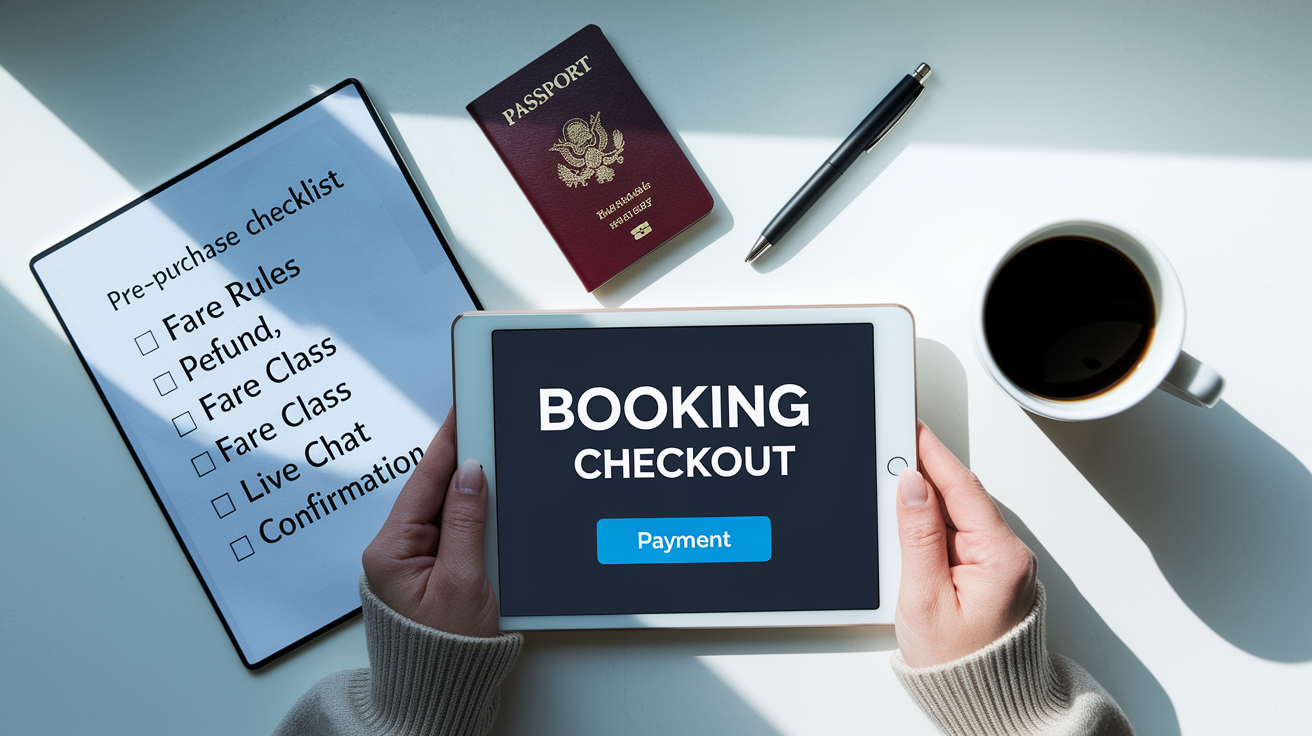
The booking page is your last clean chance to verify refundability before your card is charged. Don’t rely on the fare name alone. “Super Saver” or “Web Special” tells you nothing about refund rules.
Pre-purchase checkpoints:
-
Expand the fare rules or fare details link on the search results or seat selection page. Look for the words “refund,” “cancel,” “penalty,” and “credit.” If the link is missing or broken, try switching from the mobile app to a desktop browser. Apps sometimes hide fine print to streamline checkout.
-
Review the booking summary page right before payment. Airlines often display a short refund statement like “This fare is non-refundable” or “Changes allowed with fee” in a box near the total price. Screenshot that box.
-
Check the fare class code in the itinerary details. The code is usually one letter or a short string like “T” or “OSAVER.” Google “[airline name] fare class [code]” to find unofficial fare class charts that explain refund and change rules for that booking code.
-
Add up the all-in cost including realistic extras (one checked bag, seat selection, payment fee) and compare it to a refundable or flexible fare. If the flexible fare is only 20 to 30% more and you value the ability to cancel, the flash sale might not be worth the risk.
-
Contact the airline before finalizing payment. Open live chat or call the booking line, give them the flight numbers and fare class you’re about to buy, and ask, “If I purchase this fare and need to cancel, what are my options and fees?” Request the answer in writing via email or save the chat transcript.
How to Check Refund Options After Purchase
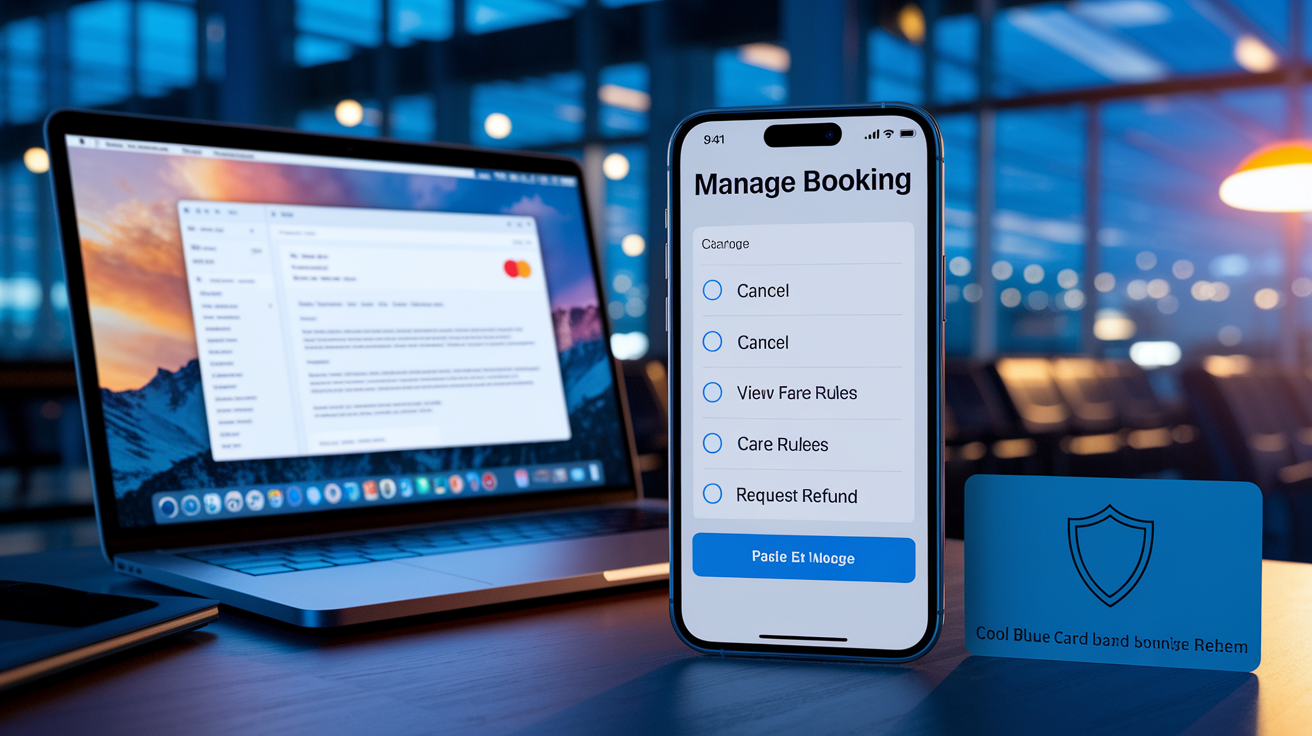
Once the ticket is issued, refund rules are locked to the fare class you bought. But you still have ways to confirm what those rules allow.
Log into the airline’s website, go to “Manage Booking,” “My Trips,” or “View Reservation,” and enter your confirmation code and last name. Most airlines display a summary of your ticket that includes a link or button labeled “view fare rules,” “ticket details,” or “change/cancel options.” Click that link and scroll to the section on cancellations and refunds. It will repeat the same fare rule text you saw at booking, plus any post-purchase actions available (cancel for credit, request refund, change flight).
Your e-ticket confirmation email is the other primary source. Look for the fare basis code (a short uppercase string next to your ticket number) and any line mentioning cancellation penalties, refund eligibility, or credit terms. If the email is silent on refunds, the airline’s app or website manage booking section is usually more complete.
Still unsure? Contact customer service by phone, chat, or email with your booking reference and ask them to confirm in writing: (1) whether the ticket is refundable or non-refundable, (2) the exact cancellation or change fee amounts, and (3) whether you qualify for the 24 hour DOT cancellation window if you’re within 24 hours of booking and the flight is U.S. origin or U.S. destination and departs at least 7 days out. Save or screenshot the agent’s reply.
Some travelers also check whether their credit card offers trip cancellation insurance or price drop protection. Those benefits can reimburse you for non-refundable fares if you cancel for a covered reason or if the fare falls after purchase.
Final Words
Check the fare rules now: locate the fare details, note the fare‑class code, and read the ticket’s refund wording.
We ran through quick steps to verify refundability, where airlines list rules, how to decode common phrases, and typical flash‑sale limits. We also covered carrier differences plus simple pre‑book and post‑purchase checks.
If you need a repeatable approach, use the steps here on how to verify if a flash sale fare is refundable — it reduces surprises and keeps your trip flexible and straightforward.
FAQ
Q: How to tell if a plane ticket is refundable?
A: To tell if a plane ticket is refundable, check the fare rules: look for “refundable,” “NO REFUNDS,” or a listed refund fee in the fare details, checkout summary, or your e‑ticket receipt.
Q: How to find refundable fares?
A: To find refundable fares, filter searches for “refundable” or “flexible” fares, check the fare class code and fare rules, or call the airline to confirm before you book.
Q: How do refundable fares work?
A: Refundable fares let you cancel and receive a cash refund or a refund after a cancellation fee; the exact rules depend on fare class and the airline’s policy.
Q: How do I know if my Delta ticket is refundable?
A: You know if your Delta ticket is refundable by checking the fare rules in My Trips or your e‑ticket for “refundable” wording or a cancellation fee, or by calling Delta reservations to confirm.